


A car accident in Las Vegas can leave an injured person facing medical appointments, vehicle repairs, missed work, and confusing insurance calls at the same time. While immediate health and safety needs come first, understanding the claims process can make later decisions less overwhelming. In situations involving significant injuries, disputed fault, or insurer resistance, speaking with injury compensation attorneys in Nevada may help a person understand the documents, deadlines, and questions that apply to their circumstances.
- Focus on Safety in the First Minutes
- Know When to Call 911
- Exchange Information Without Arguing
- Document the Crash Scene
- Get Medical Care and Follow Through
- Review Nevada Reporting Rules
- Handle Insurance Communications Carefully
- Preserve Evidence and Records
- When Legal Representation May Be Helpful
- Frequently Asked Questions
- Should I accept a quick settlement offer?
- What if the other driver leaves the scene?
- How long should I keep crash-related records?
- Final Thoughts
Personal injury legal representation is not only about filing a lawsuit. It can involve reviewing evidence, communicating with insurance companies, identifying responsible parties, tracking losses, and helping an injured person avoid signing away important rights before the full impact of a crash is known.
Focus on Safety in the First Minutes
After a collision, check yourself, passengers, and others for injuries. If possible, turn on hazard lights and move away from active traffic. A vehicle should be moved only when it is safe to do so and can be driven without creating additional danger. Stay alert for leaking fuel, broken glass, blocked lanes, and fast-moving traffic, especially near freeway shoulders or poorly lit streets.
Do not move someone with a possible serious injury unless remaining in place presents an immediate threat, such as fire or oncoming traffic. Secondary impacts can be particularly dangerous, so the goal is to reduce risk while waiting for emergency help.
Know When to Call 911
Calling 911 is appropriate when someone is injured, a driver may be impaired, a vehicle is blocking traffic, property damage is substantial, or the scene feels unsafe. Give the dispatcher the exact location or nearest intersection, the number of vehicles involved, visible injuries, road hazards, and whether a pedestrian, bicyclist, or motorcyclist was involved.
The agency that responds can depend on where the crash occurred. Incidents on freeways may involve the Nevada State Police, while other locations may fall under a local agency’s jurisdiction. Remain calm, provide factual information, and avoid trying to decide fault at the roadside.
Exchange Information Without Arguing
Drivers should exchange basic information, but a crash scene is not the place to debate who caused the collision. Be polite and factual without apologizing or making broad statements about blame, injuries, or speed before all facts are known.
- Full name, contact information, and driver’s license details
- Insurance company and policy information
- Vehicle make, model, color, and license plate number
- Registered owner information, if different from the driver
- Names and contact details for witnesses
Document the Crash Scene
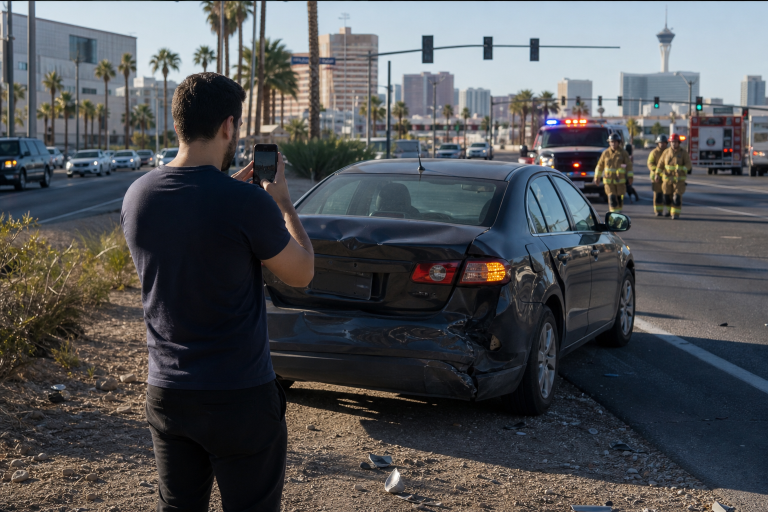
Photos and notes can preserve details that quickly disappear once vehicles are moved, roads reopen, or the weather changes. Use a phone to photograph every vehicle, visible damage, license plates, debris, skid marks, road conditions, traffic signs, lane markings, and nearby landmarks. If it is safe, take wide shots of the entire scene as well as close-ups of damage.
Notes Worth Saving
- The date, time, location, and weather conditions
- The direction each vehicle was traveling
- A brief account of what happened before and after the impact
- Comments made by witnesses or other drivers
- Responding officers’ names and any report or event number
Get Medical Care and Follow Through
Adrenaline and stress can mask pain after a crash. Headaches, neck stiffness, dizziness, numbness, sleep disruption, and concentration problems may develop hours or days later. Seek medical care based on your health needs, then follow the provider’s treatment plan and report any new or worsening symptoms.
Keep discharge paperwork, prescriptions, invoices, test results, and appointment records. A simple daily journal can also document pain levels, mobility limits, missed activities, and time away from work. These records may become important if the nature or duration of an injury is later questioned.
Review Nevada Reporting Rules
Insurance reporting and government reporting are separate responsibilities. Nevada drivers can review the current SR-1 crash-report instructions to determine whether a report is required when law enforcement did not investigate at the scene. The current DMV guidance states that the form must be filed within 10 days for qualifying crashes involving injury, death, or more than $750 in damage.
Completing a required report does not automatically establish fault, resolve an insurance claim, or extend a civil filing deadline. Keep a copy of anything submitted, along with confirmation of the submission if available.
Handle Insurance Communications Carefully
Most insurance policies require prompt notice of an accident. Provide accurate facts, but do not guess about speed, fault, medical prognosis, or the total cost of your injuries. Keep a record of every call, including the representative’s name, the date, and the request.
- Save emails, letters, estimates, and claim forms.
- Request settlement terms in writing.
- Be cautious about recorded statements when fault or injuries are disputed.
- Do not sign a release until you understand which claims it resolves.
- Avoid posting crash details, physical activities, or medical updates on social media.
Preserve Evidence and Records
Strong documentation can help clarify what happened and how the injury affected daily life. Preserve original photos and videos when possible, including dashcam footage. Back up digital files in multiple locations, since a damaged or lost phone can erase important information.
Useful records may include police reports, witness information, medical bills, repair estimates, towing invoices, employment records, pay stubs, insurance correspondence, and receipts for injury-related expenses. Do not discard damaged property before it has been photographed and evaluated.
When Legal Representation May Be Helpful
Legal guidance may be especially useful when injuries are serious, treatment is ongoing, fault is contested, or several parties may be responsible. Cases involving commercial vehicles, rideshare drivers, uninsured motorists, impaired drivers, pedestrians, or workplace travel can present additional issues.
Deadlines also matter. Nevada generally provides a two-year period for many claims involving injuries caused by another person’s wrongful act or neglect, although exceptions can apply depending on the facts. Reviewing Nevada’s limitation-of-actions law can be a useful starting point, but individualized advice is important because waiting too long can affect the options available.
Frequently Asked Questions
Should I accept a quick settlement offer?
A quick offer may address immediate expenses, but it may not account for future treatment, lost income, or injuries that have not fully developed. Understand the full terms of any release before signing it.
What if the other driver leaves the scene?
Move to safety, call 911, and record the vehicle description, direction of travel, and license plate number if possible. Photograph the scene and ask nearby witnesses whether they saw the vehicle or noticed available camera footage.
How long should I keep crash-related records?
Keep records until the insurance claim is fully resolved and any settlement documents have been carefully reviewed. Medical, employment, and evidence records can remain relevant long after vehicle repairs are complete.
Final Thoughts
After a Las Vegas car accident, a measured response can protect both health and practical options. Prioritize safety, seek appropriate medical care, document the scene, preserve records, and communicate carefully with insurers. When injuries are substantial or the claim becomes complicated, timely legal representation can help an injured person make informed decisions while focusing on recovery.
- The Benefits of Seeing a Back Doctor for Sports Injuries
- How Skin Removal Surgery Helps Enhance Weight Loss
- How Industrial Teams Can Prevent Costly Equipment Downtime
- A Complete Guide To Filing A Medical Malpractice Claim In Georgia
- Find an Inclusive Therapist in Chicago, Illinois: Culturally Responsive Care With Ida Lillie Psychotherapy