


Key Takeaways
- DNA matches provide clues, but they do not always identify an exact relationship.
- Combine DNA results with family records, documents, and family stories.
- Organize shared matches into family groups to identify possible connections.
- Verify DNA theories using reliable records, dates, locations, and family trees.
- Treat ethnicity estimates as general clues, not proof of a specific ancestor.
- Protect genetic privacy and communicate respectfully with potential relatives.
- The strongest family history research combines DNA evidence with documented facts.
Why One Type Of Evidence Is Rarely Enough
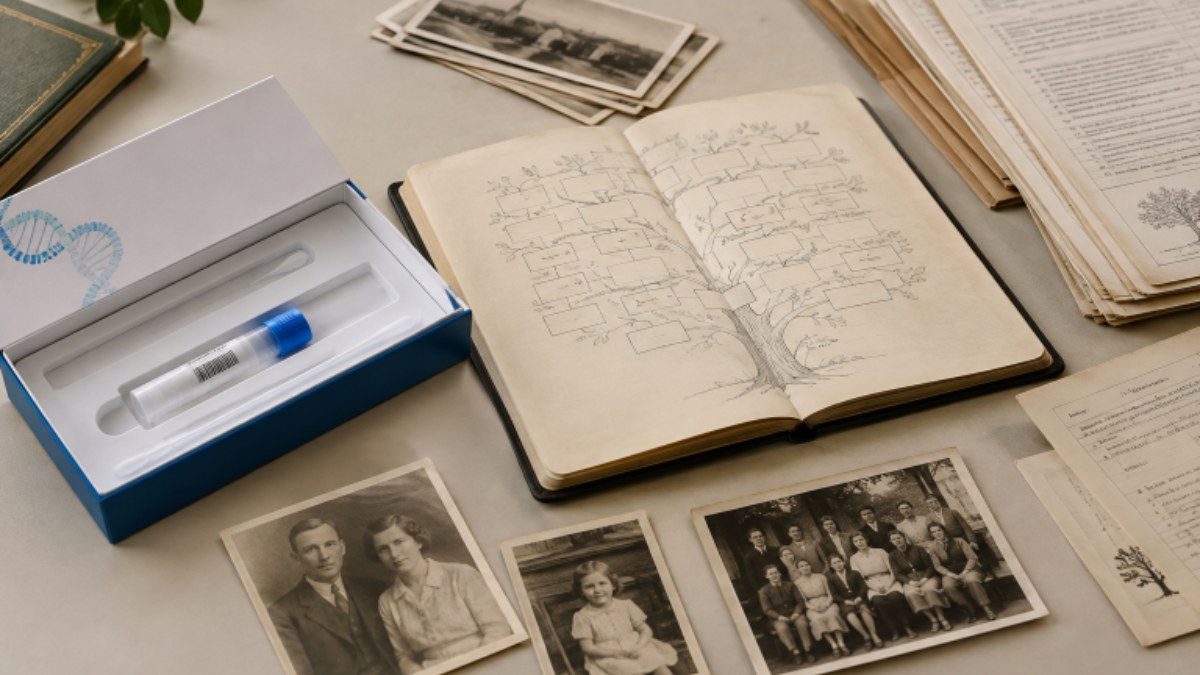
Family history research is strongest when genetic clues and written records support one another. A DNA match may suggest that two people share an ancestor, but it usually cannot identify that ancestor or explain exactly how the relationship fits into a family tree. Services such as 23andMe offer at-home DNA testing and relative-matching tools that can help researchers discover potential family connections. By comparing these genetic clues with historical documents, family records, and personal stories, researchers can build a clearer picture of their ancestry and investigate possible relationships more accurately.
For example, a person may find a possible second cousin through DNA relative matching. Census records, marriage certificates, obituaries, and residence information may then help determine which shared grandparent or great-grandparent connects the two families.
What A DNA Match Can And Cannot Tell You
A DNA match is another tested person who shares enough genetic material with you to indicate a possible biological relationship. Testing services typically report an estimated relationship range based on the amount of shared DNA, often measured in centimorgans.
- Key Takeaways
- Why One Type Of Evidence Is Rarely Enough
- What A DNA Match Can And Cannot Tell You
- Build A Paper Trail Before Making A Big Claim
- Sort Matches Into Family Groups
- Use Records To Test A DNA Theory
- Three Common Research Situations
- Why Ethnicity Estimates Should Not Lead The Investigation
- Privacy And Family Communication
- Common Mistakes To Avoid
- A Simple Six-Step Workflow For 2026
- Questions Readers May Ask
- Conclusion: Let DNA Point, Then Let Records Confirm
That estimate is helpful, but it is not a final answer. Similar amounts of shared DNA can fit more than one relationship, particularly beyond close family. A person could be a first cousin once removed, a half first cousin, or another relationship in a similar range. DNA is evidence, not an automatic identification of a particular parent, grandparent, or cousin.
Consumer ancestry tests generally use genotyping, which examines selected locations across the genome. That differs from full sequencing, which reads genetic letters across a much broader portion of DNA. Knowing the distinction helps set realistic expectations about what an ancestry test can reveal.
Build A Paper Trail Before Making A Big Claim
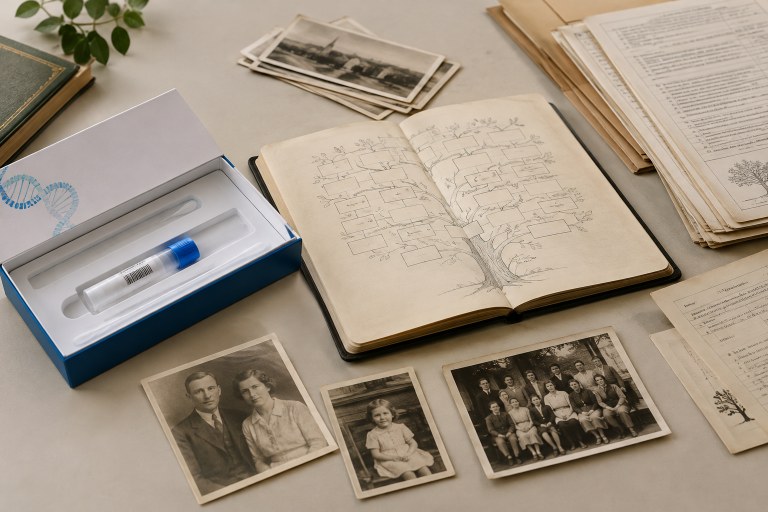
Before assigning a match to a branch of your family, create a basic record set for the people you already know. Traditional genealogy supplies the names, dates, locations, and household connections that make genetic evidence understandable.
- Write down each known person’s full name, nicknames, and alternate spellings.
- Record known birth, marriage, death, and residence details.
- Collect census entries, obituaries, wills, deeds, church records, and newspaper notices when available.
- Save where each fact came from, rather than relying on an unsourced online tree.
- Keep a separate list of conflicts and missing information that still need research.
Understanding the basics of human DNA identification can also clarify why genetic findings are most persuasive when considered alongside documented family relationships rather than in isolation.
Sort Matches Into Family Groups
Shared matches are people who match both you and another DNA relative. When several shared matches appear connected to the same known family, they may represent a maternal or paternal group. A tested aunt, uncle, first cousin, or other documented relative can act as an anchor for identifying which side is which.
Use a spreadsheet, color labels, notes, or simple folders to track each cluster. Record the match’s name, estimated relationship, shared matches, surnames, places, and any tree details. Keep in mind that relatives can be connected through more than one line when distant ancestors had children who later married.
Use Records To Test A DNA Theory
A useful theory should be tested, not simply repeated. Start with the estimated relationship range, then build the match’s tree backward as far as reliable information allows. Compare that tree with your own records for shared locations, surnames, migration routes, and ancestral couples.
- Identify the range of relationships the shared DNA could support.
- Map the match’s parents, grandparents, and great-grandparents when possible.
- Compare dates and places before assuming that a shared surname is meaningful.
- Look for an ancestral couple who appears in both research paths.
- Seek independent records that support the proposed connection.
- Label the conclusion as confirmed, probable, possible, or unproven.
Confidence grows when multiple matches from separate descendant lines point to the same ancestral family, and the documentary record agrees.
Three Common Research Situations
Finding An Unknown Parent
Close DNA matches can sometimes identify a parent’s extended family, even if no immediate parent match appears. Begin by mapping the match group and identifying the ancestors they share. Avoid making a public claim or sending an emotionally charged message before the evidence is organized, because unexpected discoveries of parentage can deeply affect living people.
Breaking Through A Missing Ancestor
A cluster of matches may point to an unfamiliar town, surname, or family network. Search land records, probate files, local newspapers, city directories, and church registers in that place. An ancestor may be difficult to find because of a spelling variation, a second marriage, an informal name, or a move across a county or state line.
Tracing Families Separated By Migration Or History
DNA connections can help researchers investigate branches separated by immigration, adoption, enslavement, war, or long-distance migration. Research into African diaspora genetic connectionsillustrates how genetic data can contribute to broader family-history questions across borders. In every case, contact should be respectful, and historical context should guide the research.
Why Ethnicity Estimates Should Not Lead The Investigation
Ethnicity estimates are statistical comparisons with reference populations. They can provide broad context, but a small percentage can usually not be confidently tied to a recent ancestor. If your goal is to solve a specific family question, begin with documented relatives and DNA matches instead.
Migration records, local history, church documents, and family stories can add useful context to regional ancestry results. They should not be used to turn an estimate into a firm claim about a particular ancestor without supporting evidence.
Privacy And Family Communication
- Review account privacy settings before enabling relative matching or research participation.
- Use a strong, unique password and two-factor authentication where available.
- Consider the privacy implications before uploading raw DNA data to another service.
- Ask living relatives before publishing sensitive family details.
- Prepare for possible discoveries involving adoption, donor conception, or unexpected parentage.
Common Mistakes To Avoid
- Treating an ethnicity estimate as proof of a recent ancestor.
- Assuming the nearest surname is the correct family connection.
- Copying online trees without checking the records behind them.
- Believing one match proves one exact relationship.
- Contacting a possible relative with accusations, demands, or a fixed conclusion.
- Using consumer ancestry results as a medical diagnosis.
A Simple Six-Step Workflow For 2026
- Define the question: Identify the person or relationship you are trying to understand.
- Gather records: Organize documents and separate known facts from family lore.
- Sort matches: Group relatives through shared connections and known family sides.
- Build trees: Research match families using records with clear source details.
- Compare evidence: Look for agreement among DNA, dates, places, and documents.
- Save your reasoning: Record sources, conclusions, and remaining uncertainty.
Questions Readers May Ask
Can A DNA Match Prove An Exact Relationship?
Usually, no. A match can support a relationship range, while additional tested relatives and historical records help narrow the possibilities.
Should DNA Replace Traditional Genealogy?
No. DNA can reveal connections that records miss, while records provide the family structure needed to interpret those connections.
What If DNA Conflicts With The Family Story?
Pause before drawing conclusions. Review the match strength, compare several relatives, check the documents, and avoid public discussion until the evidence is clear.
Conclusion: Let DNA Point, Then Let Records Confirm
DNA matches can open a door to a family mystery, but records help explain what is behind it. The most reliable approach combines genetic evidence, original documents, organized notes, and respectful communication. That balance can help you investigate family history carefully without rushing beyond what the evidence can support.
- How Foodservice Operators Can Cut Waste and Improve Consistency
- How To Build Helpful Real-Time AI Avatar Experiences For Websites
- ORA 4X Explained: What to Expect From the All-on-4 Dental Implant Process
- How To Right-Size A Home for Easier Living in Tulsa, Oklahoma
- How To Compare Los Angeles, California Neighborhoods Before Buying A Luxury Home