

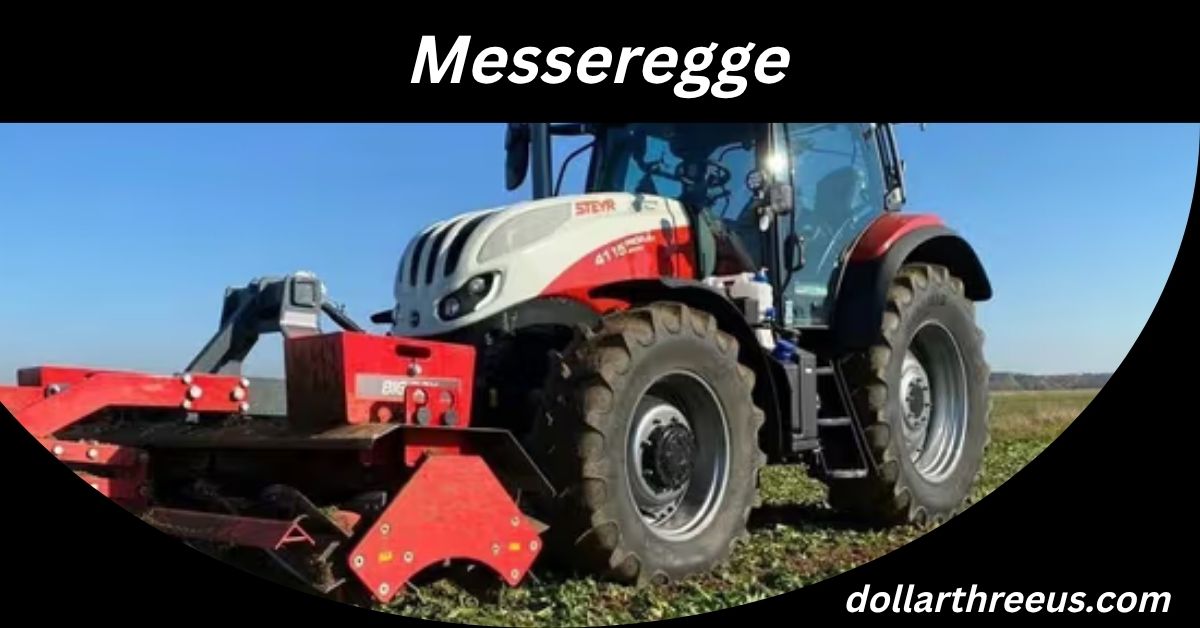

If you have recently searched for the word “messeregge,” you may have noticed something unusual: different websites give very different explanations. Some describe it as an agricultural tool, while others connect the word with digital tools, trade show design, branding, or even online communication. This makes it difficult to know which explanation is reliable.
- What Does Messeregge Mean?
- Why the Word Messeregge Can Be Confusing
- The German Roots Behind Messeregge
- What Is a Harrow?
- How a Messeregge Works
- What Is the Main Purpose of a Messeregge?
- Messeregge for Seedbed Preparation
- Messeregge and Soil Surface Crusting
- Messeregge and Weed Management
- Messeregge and Crop Residue
- Messeregge Compared With a Disc Harrow
- Messeregge Compared With a Tine Harrow
- Messeregge Compared With a Rotary Harrow
- The Importance of Working Depth
- Soil Type Matters
- Soil Moisture Matters Too
- Advantages of Using a Messeregge
- Potential Limitations of a Messeregge
- How Modern Messeregge Systems Are Integrated
- Does a Messeregge Reduce Fuel Use?
- Does Messeregge Support Conservation Agriculture?
- Choosing a Messeregge for Farm Use
- Blade Quality and Replacement Parts
- Maintenance of a Messeregge
- Safety When Operating a Messeregge
- Is Messeregge Common in the United States?
- Messeregge and Modern Farming Technology
- Why Messeregge Is Appearing in Digital Discussions
- How to Evaluate Information About Messeregge Online
- Messeregge as a Lesson in Search Intent
- Is Messeregge a Tool, a Machine, or a Concept?
- The Most Important Benefits in Simple Terms
- Common Mistakes When Understanding Messeregge
- What Messeregge Teaches Us About Better Farming
- The Future of Messeregge Technology
- Final Thoughts on Messeregge
- Frequently Asked Questions About Messeregge
- Is messeregge a German word?
- What is the English meaning of messeregge?
- Is messeregge used in farming?
- Is messeregge the same as a plow?
- Can a messeregge prepare a seedbed?
- Can messeregge equipment control weeds?
- Does a messeregge work deeply?
- Can messeregge equipment work with a roller?
- Is messeregge a brand?
- Is messeregge a digital platform?
- Why do some websites say messeregge is related to trade shows?
- Is messeregge the same as a knife?
- Can a messeregge replace a disc harrow?
- Can a messeregge be used on every type of soil?
- Is shallow cultivation always better?
- What should farmers check before buying a messeregge?
- Is messeregge relevant to modern agriculture?
- What is the biggest advantage of a messeregge?
- What is the biggest limitation of a messeregge?
- How should beginners understand messeregge?
The clearest and most practical meaning of messeregge is connected to German agricultural terminology. The word is generally understood as a combination of the German words Messer, meaning knife or blade, and Egge, meaning harrow. In agricultural use, it therefore points to a knife harrow or blade-based harrow used for shallow soil cultivation and seedbed preparation. German-English dictionary results also associate Messeregge with agricultural terminology and the English term “scarifier.”
At the same time, the word has become a curious online keyword. Newer websites sometimes use messeregge as a broader concept for precision, simplicity, digital tools, or modern branding. Those newer interpretations should be treated carefully because they do not have the same practical foundation as the agricultural meaning.
This guide explains messeregge in simple English. It covers its meaning, German roots, agricultural purpose, design, operation, advantages, limitations, comparison with other harrows, maintenance, buying considerations, and the reason the term is producing confusing search results in 2026.
What Does Messeregge Mean?
Messeregge is best understood as a German agricultural term referring to a knife harrow or blade-based soil-working implement.
The word can be separated into two parts:
Messer means “knife” or “blade.”
Egge means “harrow.”
A harrow is a farming implement designed to work the upper layer of soil. Depending on its design, a harrow can break clods, loosen soil, level the field, disturb weeds, incorporate light residue, and prepare a suitable surface for planting.
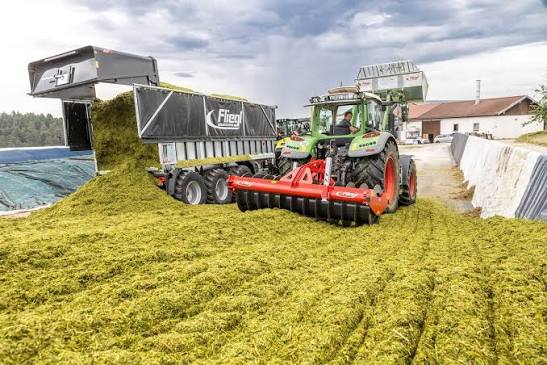
When the word Messer is combined with Egge, it describes a harrow that uses knife-like or cutting elements. The main idea is not simply to dig deeply into the ground. Instead, the tool is designed around controlled cutting and shallow soil disturbance.
This is why “knife harrow” or “blade harrow” is a useful English explanation of messeregge.
The agricultural interpretation is also supported by several current references that describe the term as a blade-equipped implement used for soil preparation.
For an American reader, the simplest way to understand messeregge is this:
A messeregge is a specialized harrow that uses knife-like working parts to cut, loosen, level, or otherwise prepare the upper soil layer.
The exact construction can vary between machines, so it is important not to assume that every implement called a messeregge has identical blades, working depth, frame design, or operating method.
Why the Word Messeregge Can Be Confusing
One of the biggest problems with this keyword is that it has attracted a large amount of low-context online content.
When people search an unusual word, websites sometimes create articles around the keyword before there is enough reliable information to establish a consistent meaning. That has happened with messeregge.
Some online pages describe it as an agricultural implement. Others claim it is related to exhibition systems. Still others describe it as a digital platform, communication idea, branding concept, or online productivity philosophy.
This does not mean that every secondary use is impossible. A company can give almost any unusual word a new brand meaning. However, a modern brand interpretation should not automatically replace an established technical meaning.
The agricultural explanation has a clear linguistic structure and a practical use:
Messer + Egge = knife + harrow.
That is much stronger evidence than a website simply saying that messeregge is a new digital technology without providing a working product, manufacturer, technical documentation, or other evidence.
For this reason, anyone researching the word should look at context before accepting a definition.
If the surrounding content discusses tractors, soil, seedbeds, cultivation, blades, harrows, or farming equipment, messeregge almost certainly refers to agricultural machinery.
If the word appears on a marketing website as a company or product name, it may have been adopted as a brand.
The German Roots Behind Messeregge
German is well known for creating compound words by joining smaller words together.
Agricultural terminology provides many good examples.
Also Read: Voddler.co.uk: The Website, Its Content, Streaming Topics, Safety
Egge means harrow and serves as the main category. A descriptive word placed before it can indicate the type of harrow.
For example, German agricultural terminology includes terms associated with different types of harrows and soil-working machines. The word Messeregge fits naturally into this system because Messer identifies the knife or blade element.
This is useful because it explains why the term may look strange to an English speaker. It is not necessarily a random invented word. It follows a recognizable German compound-word structure.
The German word Messer itself is commonly understood as “knife.” The word Egge refers to a harrow, a piece of equipment used for working soil.
Together, the agricultural meaning becomes much easier to understand.
It is also important not to confuse Messer with Messe. Messe can refer to a trade fair or exhibition in German, while Messer means knife. This distinction matters because some online explanations connect messeregge with trade shows simply because of the similarity between Messe and Messer.
For the agricultural term, the knife-and-harrow interpretation is the more logical explanation.
What Is a Harrow?
To understand messeregge, it helps to first understand the basic purpose of a harrow.
A harrow is a soil-working implement used to prepare or manage the upper part of a field. Traditional harrows can have teeth, tines, chains, discs, or other working elements.
Farmers use different harrows for different jobs.
A harrow may help:
- Break up soil clumps
- Smooth uneven ground
- Prepare a seedbed
- Disturb small weeds
- Manage light crop residue
- Improve the soil surface for planting
- Break a surface crust
- Distribute soil more evenly
The important point is that a harrow is not the same as a plow.
A plow is generally associated with more aggressive soil inversion and deeper soil movement. A harrow usually focuses on the surface or upper soil layer.
A messeregge belongs to the harrow family but uses knife-like working elements to create a specific cutting action.
How a Messeregge Works
The basic working principle of a messeregge is simple.
The implement is attached to a tractor or integrated into another agricultural machine. As the tractor moves forward, the knife or blade elements contact the soil.
Instead of relying on a powered rotating mechanism like a rotary tiller, a typical passive knife-style implement uses forward movement and blade geometry to work the soil.
The blades can cut through the surface, disturb small clods, help level the field, and interact with crop residue.
The exact effect depends on several factors:
- Blade shape
- Blade angle
- Working depth
- Tractor speed
- Soil moisture
- Soil type
- Amount of residue
- Field condition
- Machine configuration
This is important because there is no single operating setting that works perfectly in every field.
A dry, hard soil surface can behave very differently from moist loam. Heavy clay can respond differently from sandy soil. A field covered with residue requires a different approach from a clean seedbed.
What Is the Main Purpose of a Messeregge?
The main purpose of a messeregge is controlled soil preparation.
Instead of aggressively turning the entire soil profile, the implement is used to improve the surface condition where necessary.
Common objectives include preparing the seedbed, cutting surface crusts, leveling soil, disturbing small weeds, and managing light residue.
A farmer may choose this type of equipment when the field needs a relatively shallow treatment rather than a major cultivation operation.
This can be especially useful when the goal is to perform several related tasks in one pass.
Modern agricultural equipment is increasingly designed around this idea. Farmers want machines that can perform useful work efficiently while reducing unnecessary field passes.
Messeregge for Seedbed Preparation
Seedbed preparation is one of the most important applications of a knife harrow.
A good seedbed should provide reasonably consistent conditions for seed placement and early plant growth.
The surface should not contain excessive large clods. It should also avoid being so finely worked that it becomes vulnerable to crusting, erosion, or other problems.
A messeregge can help create a more uniform surface by cutting and working the upper layer.
The goal is not simply to make soil look smooth.
Good seedbed preparation is about creating conditions that allow seeds to be placed consistently and establish properly.
That distinction is important. A field can look attractive after cultivation and still have poor agronomic conditions.
Farmers therefore need to consider moisture, structure, compaction, residue, seed depth, weather, and the needs of the crop rather than judging the tool only by appearance.
Messeregge and Soil Surface Crusting
Soil crusting can create problems after rainfall, particularly when a surface dries into a hard layer.
A crust can make it more difficult for emerging seedlings to reach the surface.
A shallow knife-based tool can sometimes be used to disturb or break such a surface layer.
However, timing matters.
Working soil that is too wet can cause smearing and compaction. Working extremely dry soil can require excessive force and may produce unwanted dust or large soil fragments.
This is one reason why a messeregge should be treated as a precision tool rather than a machine that can simply be driven across a field under any conditions.
Messeregge and Weed Management
Some harrow systems can contribute to mechanical weed control by disturbing young weeds.
The principle is straightforward: small weeds are more vulnerable to mechanical disturbance than well-established plants.
A knife harrow can disturb weeds close to the soil surface while performing other cultivation work.
However, farmers should not assume that a messeregge automatically replaces every other weed-management strategy.
Weed species, growth stage, crop stage, soil condition, and weather all matter.
Mechanical weed control works best when the equipment is used at the right time and with appropriate settings.
This is an example of why agricultural machinery should be viewed as part of a management system rather than a single solution.
Messeregge and Crop Residue
Crop residue is another area where blade-based cultivation can be useful.
After harvest, plant material may remain on the field. Depending on the farming system, farmers may want to leave much of that residue on the surface, mix some of it into the soil, or break it into smaller pieces.
A knife-style implement can cut or disturb lighter residue while working the soil surface.
The correct approach depends on the farm’s broader soil-management strategy.
Residue can protect soil from erosion, reduce evaporation, add organic matter over time, and provide habitat for soil organisms. Removing or aggressively burying all residue is not automatically better.
Therefore, the value of messeregge equipment depends on how it is integrated into the farm’s goals.
Messeregge Compared With a Disc Harrow
A disc harrow uses circular discs as its main working elements.
Those discs cut and move through the soil. Depending on disc angle, depth, speed, and soil condition, a disc harrow can produce significant soil movement.
A messeregge, by comparison, is centered around knife-like or blade-style working elements.
The difference can be summarized simply:
A disc harrow uses rotating discs.
A messeregge uses knife or blade-type elements.
Neither is automatically better.
A farmer should select equipment based on the job.
If substantial soil mixing and residue incorporation are needed, a disc-based machine may be more appropriate.
If shallow cutting and surface preparation are the priority, a knife-style system may be more suitable.
Messeregge Compared With a Tine Harrow
A tine harrow uses teeth or tines to scratch and loosen the soil.
Tines can be rigid, flexible, spring-loaded, or designed for particular depths and conditions.
A messeregge differs because its working elements are designed more around cutting action.
The distinction may seem small, but the shape and angle of the working element can significantly affect how soil moves.
The right choice depends on what the farmer wants to accomplish.
Tine harrows can be excellent for surface loosening and weed disturbance.
Knife-based systems can provide a more defined cutting action.
Modern farms may also use several types of implements during different stages of production.
Messeregge Compared With a Rotary Harrow
A rotary harrow uses powered rotating components.
Because the tractor’s power is transferred to the working mechanism, rotary harrows can create a more intensive soil-working effect.
A passive messeregge, in contrast, generally relies on forward movement rather than powered rotating elements.
This can affect fuel use, maintenance, soil disturbance, and operating requirements.
Again, this does not mean one machine is universally better.
A rotary harrow may be useful when intensive seedbed preparation is needed. A knife harrow can be useful when a lighter, more controlled surface operation is preferred.
The Importance of Working Depth
Working depth is one of the most important settings when using a messeregge.
Going deeper is not automatically better.
Deep cultivation requires more draft power and can move more soil. It can also affect moisture, structure, and compaction.
Shallow cultivation can accomplish the intended surface task with less soil disturbance.
The correct depth should therefore be based on the actual problem.
If the goal is to break a surface crust, there may be little reason to disturb soil far below that crust.
If the goal is more extensive soil preparation, a different machine may be more appropriate.
This is one of the strongest lessons associated with precision cultivation: do only as much soil work as the field actually needs.
Soil Type Matters
A messeregge will behave differently in different soils.
Sandy soils are often easier to work but can be more vulnerable to excessive disturbance and moisture loss.
Clay soils can become very hard when dry and sticky when wet.
Loam often provides a balance of sand, silt, and clay, but even loamy fields can behave very differently depending on moisture and organic matter.
Because of these differences, farmers should evaluate field conditions before choosing settings.
Machine specifications alone cannot tell you how a tool will behave in a particular field.
Soil Moisture Matters Too
Soil moisture can make or break a cultivation operation.
If soil is too wet, traffic and cultivation can create smearing or compaction.
If soil is too dry, the implement may struggle to achieve the desired effect and can create excessive dust or uneven soil breakup.
The best operating window depends on the soil and objective.
This is why experienced farmers often pay close attention to field conditions rather than following a fixed calendar.
Advantages of Using a Messeregge
A properly selected messeregge can provide several potential advantages.
First, it can perform shallow soil preparation with a clear cutting action.
Second, it can help create a more even seedbed.
Third, it may combine several light field tasks into one pass when integrated with other equipment.
Fourth, its relatively simple mechanical concept can make it easier to understand and maintain than more complex powered machines.
Fifth, it can support a lower-disturbance approach when the farmer does not need deep cultivation.
Some modern European systems combine a front packer with a Messeregge, allowing soil cutting and consolidation to happen as part of a combined field operation.
Potential Limitations of a Messeregge
No farm implement is perfect.
A messeregge may not be the right choice when deep soil loosening is required.
It may also be less suitable for heavy compaction that requires a different type of subsoiling equipment.
Very heavy residue can create challenges depending on blade design and machine setup.
Wet conditions can also reduce performance and increase the risk of unwanted soil damage.
Another limitation is that the word messeregge can refer to different configurations. Buyers should therefore avoid purchasing equipment based on the name alone.
Technical specifications are more important than the label.
How Modern Messeregge Systems Are Integrated
One interesting development in modern agricultural equipment is the integration of multiple functions.
Instead of using one machine for cutting, another for leveling, and another for consolidation, manufacturers can combine several functions into one system.
A messeregge may be incorporated into a front-mounted packer or other seedbed-preparation setup.
This approach can save time during short fieldwork windows.
Agriculture often depends heavily on weather. A farmer may have only a few days when soil conditions are suitable for planting.
A machine that can complete several operations in one pass can therefore provide practical value beyond simple fuel savings.
It can also reduce the number of times tractors and implements travel across the field.
Does a Messeregge Reduce Fuel Use?
Potentially, but the answer depends on the machine and field operation.
If a messeregge allows a farmer to combine two operations into one pass, total fuel use may decrease.
However, fuel efficiency depends on working width, depth, tractor size, soil resistance, speed, field shape, tire setup, and many other factors.
It would be misleading to promise a fixed fuel-saving percentage for every messeregge.
The better question is:
Can this machine perform the required work with fewer or more efficient passes?
That is something farmers can evaluate using their own field records.
Does Messeregge Support Conservation Agriculture?
The answer depends on how it is used.
A shallow blade-based operation can reduce soil disturbance compared with more aggressive cultivation, but that does not automatically make every messeregge system a conservation-agriculture tool.
Conservation farming is broader than using one machine.
Also Read: InstaPV: The Anonymous Instagram Viewer
It can include reduced soil disturbance, soil cover, crop rotation, residue management, erosion control, and other practices.
A messeregge may fit into such a system when it is used carefully and when the overall farming strategy supports soil health.
The important point is to avoid treating equipment names as proof of sustainability.
The actual field practice matters more.
Choosing a Messeregge for Farm Use
If you are considering purchasing a messeregge or a similar knife harrow, begin with the job rather than the brand.
Ask yourself:
What problem am I trying to solve?
Do I need seedbed preparation?
Do I need shallow crust breaking?
Do I need residue cutting?
Do I need leveling?
Do I need weed disturbance?
Do I need soil consolidation at the same time?
Once the task is clear, compare equipment specifications.
Important factors include:
- Working width
- Working depth
- Blade design
- Blade spacing
- Frame strength
- Hitch type
- Depth adjustment
- Weight
- Tractor horsepower requirements
- Replacement blade availability
- Compatibility with rollers
- Transport width
- Local dealer support
- Maintenance requirements
These factors are more useful than choosing equipment simply because it is marketed as a messeregge.
Blade Quality and Replacement Parts
Because cutting elements are central to the machine, blade quality matters.
Blades experience wear as they move through soil, stones, roots, and residue.
A good machine should have replacement components that are easy to source.
Before buying used equipment, inspect the blades carefully.
Look for:
- Excessive wear
- Bending
- Cracks
- Uneven wear
- Loose mounting points
- Damaged fasteners
- Corrosion
- Frame damage
Replacement costs should also be included in the ownership calculation.
A cheap used machine can become expensive if critical components are difficult to find.
Maintenance of a Messeregge
Maintenance is usually easier when it is performed regularly rather than after a major failure.
After fieldwork, inspect the working elements and frame.
Remove packed soil or residue when appropriate.
Check bolts, mounting points, bearings if fitted, and hydraulic components if the machine uses them.
Inspect blades for wear.
Look for cracks or deformation in the frame.
Lubricate components according to the manufacturer’s instructions.
Before storing the machine for an extended period, clean it and protect vulnerable metal surfaces as appropriate.
The exact maintenance schedule should always come from the equipment manufacturer because different machines have different components.
Safety When Operating a Messeregge
Agricultural equipment can be dangerous even when the design looks simple.
Knives, blades, frames, rollers, hydraulic systems, and tractor connections can all create hazards.
Never work underneath raised equipment unless it has been properly supported according to the manufacturer’s safety procedures.
The tractor should be shut down and secured before maintenance.
Keep people away from moving machinery.
Use the correct personal protective equipment for maintenance tasks.
Operators should also understand the machine’s transport position and road requirements.
Safety should not be treated as an optional part of equipment ownership.
Is Messeregge Common in the United States?
The word itself is much more common in German-speaking agricultural contexts than in everyday American farming language.
American farmers are more likely to search for terms such as knife harrow, blade harrow, shallow cultivator, harrow, field cultivator, or specific machine categories.
This is one reason an American reader may encounter the word online and have trouble finding familiar information.
The underlying agricultural concept is not necessarily foreign. The terminology is.
When researching equipment in the United States, it can therefore be helpful to search both “messeregge” and related English terms such as “knife harrow” and “blade harrow.”
Messeregge and Modern Farming Technology
Modern farming is increasingly focused on precision.
GPS guidance, automatic steering, digital field maps, variable-rate applications, soil sensors, machine monitoring, and data-based decision-making have changed the way farmers manage fields.
A relatively simple implement such as a messeregge may seem unrelated to this technology.
In reality, they can work together.
Precision agriculture is not only about computers.
It is also about applying the right physical action at the right location and time.
A farmer using guidance technology can make straighter passes.
A farmer using soil data can identify areas that need different treatment.
A farmer using modern machinery can adjust working depth or other settings more accurately.
The broader lesson is that precision begins with good decisions, not expensive technology.
Why Messeregge Is Appearing in Digital Discussions
The agricultural meaning is not the only reason the keyword appears online today.
Several 2026 websites have tried to connect messeregge with digital tools, productivity, branding, or online communication. Toolsimpli, for example, presents messeregge as a metaphor for precise, simple digital utilities that solve a specific task without unnecessary complexity.
That interpretation can be interesting as a metaphor.
A blade-based farming tool works on a specific part of the soil and performs a focused job. A simple online utility can similarly focus on one digital task.
However, readers should separate metaphor from established definition.
There is a difference between saying “messeregge inspires a philosophy of precision” and saying “messeregge is officially the name of a digital platform.”
The first is an interpretation.
The second requires evidence.
As of 2026, online discussions about a supposed digital Messeregge platform should therefore be treated carefully unless they provide verifiable information about an actual company, product, users, software, or service. Some investigations into the keyword have similarly noted that digital-platform claims are often presented without evidence of a functioning product.
How to Evaluate Information About Messeregge Online
Because the keyword produces mixed search results, readers should use basic source-checking skills.
First, check whether the article identifies a real manufacturer or technical source.
Second, look for specific equipment information.
Third, see whether the claims are supported by manuals, product pages, agricultural organizations, dictionaries, or other reliable references.
Fourth, be cautious when an article gives dramatic claims without measurements or evidence.
Fifth, check whether the same unusual definition appears across many websites simply because those sites copied one another.
This last point is especially important.
Ten websites repeating the same statement do not necessarily provide ten independent sources.
Online popularity and factual reliability are not the same thing.
Messeregge as a Lesson in Search Intent
The keyword is also an interesting example of how modern search works.
A person searching for messeregge may have completely different goals.
One user may want a definition.
Another may be looking for farming machinery.
Another may have seen the term on a German equipment website.
Someone else may be researching an online brand.
A good article should recognize those possibilities without pretending they are equally established.
For most readers, the agricultural meaning should come first because it has the strongest practical foundation.
Secondary digital interpretations can then be explained as modern uses, branding ideas, or online interpretations.
This approach provides clarity while acknowledging why search results may look confusing.
Is Messeregge a Tool, a Machine, or a Concept?
In its agricultural context, messeregge is best treated as a type of agricultural implement or harrow system.
It is not simply an abstract idea.
It can be a physical machine or working component used for soil cultivation.
In digital content, the word can also be used metaphorically.
This produces three possible layers:
The first layer is the established agricultural meaning.
The second is secondary industry-specific usage.
The third is modern online branding or conceptual interpretation.
Keeping those layers separate is the best way to avoid misinformation.
The Most Important Benefits in Simple Terms
For a reader who wants the short practical explanation, the major potential benefits of a messeregge include:
Also Read: Decobry: Complete Guide to Home Decorating and Design Planning
- Shallow soil preparation
- Cutting or disturbing the soil surface
- Seedbed preparation
- Surface leveling
- Light residue management
- Possible mechanical weed disturbance
- Potential combination with other implements
- Potential reduction in field passes
- A focused alternative to more aggressive cultivation in suitable conditions
The word “potential” is important.
Actual performance depends on the machine design, field conditions, operator settings, soil type, and farming system.
Common Mistakes When Understanding Messeregge
One common mistake is assuming that messeregge means “messenger.”
It does not.
Another mistake is assuming that every website using the word is describing the same thing.
They are not.
A third mistake is assuming that a knife harrow is simply a lighter version of every other harrow.
Different machines work differently.
A fourth mistake is believing that shallow cultivation is always better than deep cultivation.
The correct amount of soil disturbance depends on the field.
A fifth mistake is focusing on the machine without considering timing.
Even excellent equipment can produce poor results when used under unsuitable soil conditions.
What Messeregge Teaches Us About Better Farming
The most useful lesson from messeregge is not simply that blades can prepare soil.
It is the idea of matching the intensity of a tool to the problem.
Farmers often face pressure to do more: cultivate deeper, use more power, make the field finer, or perform more operations.
But more work is not always better.
Soil is a living system.
Every pass can affect structure, moisture, residue, organic matter, and compaction.
A precision tool becomes valuable when it can solve a specific problem without creating unnecessary disturbance.
That is where the concept of a knife harrow can fit into modern farming.
The Future of Messeregge Technology
Agricultural machinery is moving toward greater integration.
Future systems are likely to focus on better adjustment, improved durability, more efficient tractor compatibility, and better integration with planting and soil-management equipment.
Automation may also influence how implements are operated.
GPS guidance and machine-control systems can help operators maintain consistent passes. Sensors may eventually provide more information about soil conditions and machine performance.
The basic principle, however, will remain the same.
A soil-working implement must interact with the ground in a way that supports the farmer’s objective.
Technology can improve control, but it cannot eliminate the need for good agronomic judgment.
Final Thoughts on Messeregge
Messeregge is an unusual word, but its agricultural meaning becomes much easier to understand once its German roots are examined.
Messer means knife or blade, while Egge means harrow. Together, the term points to a knife-style or blade-based harrow used for soil cultivation and surface preparation.
Its practical role can include seedbed preparation, surface cutting, leveling, light residue management, and other shallow cultivation tasks.
The exact design varies, so the word should not be treated as a guarantee of a particular machine specification.
The online side of messeregge is more complicated. In 2026, some websites have turned the keyword into a digital or branding concept, while others discuss exhibition design and unrelated interpretations. Those uses may be interesting, but they should be clearly separated from the agricultural meaning.
For American readers, the easiest way to research the term is to connect messeregge with English agricultural terms such as knife harrow, blade harrow, shallow cultivation, and seedbed preparation.
The larger lesson is valuable too: unusual search terms should not be judged by the number of websites discussing them. Good information comes from context, evidence, practical use, and reliable sources.
In the case of messeregge, the strongest and most useful starting point is agriculture.
Frequently Asked Questions About Messeregge
Is messeregge a German word?
Yes. Messeregge is a German agricultural term. It can be understood by combining Messer, meaning knife or blade, with Egge, meaning harrow.
What is the English meaning of messeregge?
The most useful English description is “knife harrow” or “blade harrow.” Some dictionary sources also associate the agricultural term with “scarifier.”
Is messeregge used in farming?
Yes. Current agricultural references describe messeregge as a blade-based or knife-style soil-working implement used for field preparation.
Is messeregge the same as a plow?
No. A messeregge is generally associated with harrowing or shallow soil cultivation, while a plow performs a different and usually more intensive soil-working function.
Can a messeregge prepare a seedbed?
Yes. Seedbed preparation is one of the main applications associated with knife harrow systems. The implement can help create a more uniform soil surface when used under suitable conditions.
Can messeregge equipment control weeds?
It can contribute to mechanical weed disturbance, particularly when weeds are small and conditions are suitable. However, it should not be considered a universal replacement for an integrated weed-management program.
Does a messeregge work deeply?
The answer depends on its specific design and settings. Many knife-harrow systems are intended for relatively shallow work, but users should always follow the manufacturer’s specifications rather than assuming one depth applies to every machine.
Can messeregge equipment work with a roller?
Some modern systems combine knife-harrow components with packers or rollers. This allows soil cutting and consolidation to occur within an integrated operation.
Is messeregge a brand?
Not necessarily. The agricultural term describes a type of equipment or design rather than automatically identifying one company or product.
Is messeregge a digital platform?
There are websites that use the word in digital or branding contexts, but readers should distinguish those modern interpretations from the established agricultural meaning. Claims about a specific operating digital platform should be checked for verifiable evidence.
Why do some websites say messeregge is related to trade shows?
Some online sources use messeregge to describe exhibition or booth edge systems. However, this should not be confused with the agricultural German compound Messer + Egge. The agricultural meaning has a clearer linguistic and technical basis.
Is messeregge the same as a knife?
No. The word contains Messer, which means knife, but messeregge refers to a harrow-related agricultural implement rather than an ordinary knife.
Can a messeregge replace a disc harrow?
Not in every situation. A disc harrow and a knife harrow have different working mechanisms and are suited to different field conditions and objectives.
Can a messeregge be used on every type of soil?
No. Soil texture, moisture, residue, compaction, and field condition all affect performance. Equipment settings should be adjusted to the specific field.
Is shallow cultivation always better?
No. Shallow cultivation can be useful when the problem is near the soil surface, but deeper cultivation may sometimes be necessary for specific agronomic problems. The correct approach is to match the operation to the actual need.
What should farmers check before buying a messeregge?
Farmers should examine working width, blade design, depth adjustment, tractor requirements, frame quality, replacement parts, transport dimensions, maintenance needs, and compatibility with existing equipment.
Is messeregge relevant to modern agriculture?
Yes. Although the word is German and may be unfamiliar to American readers, the underlying idea of controlled soil preparation remains relevant to modern farming.
What is the biggest advantage of a messeregge?
Its main potential advantage is focused soil action. It can perform shallow cutting and surface preparation without necessarily requiring the same level of soil disturbance as more aggressive cultivation equipment.
What is the biggest limitation of a messeregge?
Its biggest limitation is that it is not a universal cultivation solution. It may not be suitable for deep compaction, very heavy residue, unsuitable moisture conditions, or jobs requiring intensive soil mixing.
How should beginners understand messeregge?
Start with the simplest definition: messeregge is a German agricultural term associated with a knife or blade harrow. Then learn how its specific machine design is used in the field.