


Key Takeaways
- Full-arch tooth replacement is a significant health decision that requires detailed planning.
- Good candidacy involves oral health, bone condition, overall health, lifestyle, and realistic goals.
- Healing takes place in stages, so recovery plans should include short-term support and long-term follow-up.
- Consistent home cleaning and professional maintenance help protect implants and the surrounding gum tissue.
- A complete consultation should cover risks, alternatives, timelines, materials, costs, and future care needs.
Replacing all or most teeth in an upper or lower jaw can improve day-to-day function, but it is not a one-size-fits-all procedure. An all on x dental implant approach may use several implants to support a full set of prosthetic teeth, but the right plan depends on the condition of each patient’s teeth, gums, bite, jawbone, and overall health. Dental implants are surgically placed medical devices that can support crowns, bridges, or dentures, so patients should understand both the possible benefits and complications before proceeding. The factors that affect implant healing and long-term stability include overall health, smoking status, oral hygiene, and regular follow-up care.
- Key Takeaways
- Why Full-Arch Treatment Requires Careful Planning
- Key Candidacy Factors
- Questions To Ask Before Treatment
- The Typical Treatment Timeline
- How To Prepare For Recovery
- Risks, Alternatives, and Second Opinions
- Daily Care and Long-Term Maintenance
- Warning Signs That Need Prompt Attention
- Final Thoughts
Why Full-Arch Treatment Requires Careful Planning
Replacing multiple teeth is more complex than restoring one missing tooth. The dental team must consider chewing force, speech, facial support, smile appearance, jaw alignment, gum health, and how the upper and lower teeth meet. A quick visual assessment is not enough. Proper planning commonly involves a health history, clinical examination, imaging, bite records, and a discussion about what the patient wants to achieve. Some people need treatment for one arch only, while others may need care for both arches. In either situation, the goal should be a stable, cleanable restoration that fits the person’s bite and lifestyle. Preserving healthy, natural teeth may still be appropriate in some cases, so treatment should not begin until the available options have been reviewed carefully.
Key Candidacy Factors
Age alone does not determine whether someone is a candidate for full-arch implant treatment. A person’s ability to heal, manage daily hygiene, and attend follow-up visits often matters far more than a number on a medical form.
- The condition of remaining teeth, gums, and supporting bone
- Active infection, untreated gum disease, or areas of inflammation
- Jawbone volume and density, including whether grafting may be needed
- Medical conditions that can affect surgery or healing
- Medication history, especially medications that affect bone metabolism
- Smoking, vaping, alcohol use, and oral hygiene habits
- Ability to follow food restrictions and attend maintenance appointments
- Realistic expectations about appearance, comfort, timing, and future repairs
Questions To Ask Before Treatment
A good consultation should leave patients with clear answers, not pressure or confusion. Bring written questions and ask for explanations in plain language.
- Can any healthy teeth be preserved?
- What are the benefits and limitations of treating one arch versus both?
- Will I need extractions, bone grafting, or treatment for gum disease first?
- What temporary teeth will I wear, and when might final teeth be placed?
- Who performs the surgical and restorative portions of treatment?
- What risks are most relevant to my health history and anatomy?
- What costs could arise later for repairs, relines, adjustments, or replacement?
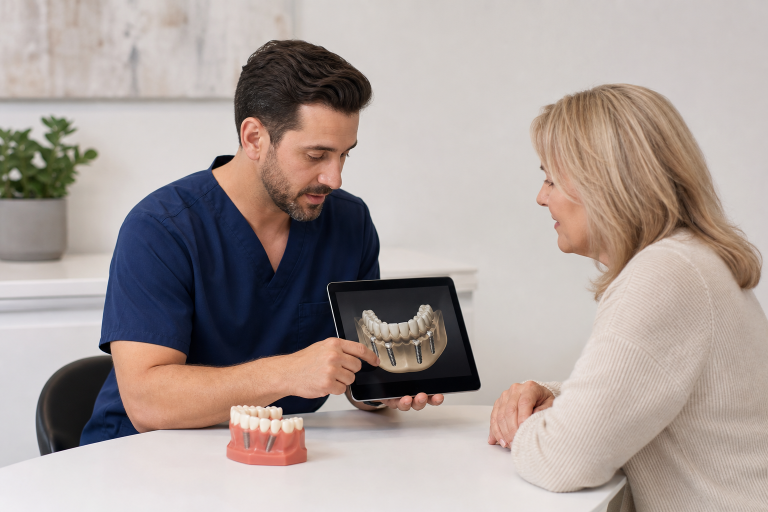
The Typical Treatment Timeline
Timelines vary widely. Infection control, bone quality, medical history, implant stability, and the type of restoration can all affect the sequence and pace of care.
- Evaluation: The team reviews scans, photographs, gums, bite, medical history, and treatment goals.
- Planning: A surgical and restorative plan is developed, including temporary tooth options when appropriate.
- Placement: Implants are placed according to the approved plan, sometimes alongside tooth removal.
- Early healing: The mouth is monitored while swelling decreases and tissues recover.
- Integration: The implants are assessed for stability as they heal within the jawbone.
- Final restoration: Permanent prosthetic teeth are fitted, adjusted, and checked for bite balance.
- Maintenance: Regular exams and professional cleanings become part of long-term care.
How To Prepare For Recovery
Plan for the first few days. Stock soft foods that fit the care team’s instructions, arrange transportation if sedation is used, fill approved prescriptions, prepare cold packs, and use extra pillows if elevation is recommended. It may also help to schedule time away from strenuous work, exercise, or household responsibilities. Swelling, tenderness, fatigue, and temporary changes in speech or eating can occur during early recovery. Follow the instructions provided for your specific case instead of relying on social media advice or another patient’s experience. Healing needs and food restrictions can differ substantially.
Risks, Alternatives, and Second Opinions
Implants can fail, prosthetic components can loosen or fracture, and gum or bone problems can develop around implants. Other options may include conventional dentures, removable implant-supported dentures, bridges, partial dentures, or staged treatment that preserves selected teeth. The best option is the one that matches the diagnosis, budget, health needs, and willingness to maintain the result. Patients should expect a comprehensive examination and a discussion of alternatives before making financial decisions about complex treatment. The importance of discussing every available treatment option includes preserving healthy teeth when possible and seeking a second opinion if the recommendation does not feel clear or comfortable.
Daily Care and Long-Term Maintenance
Fixed prosthetic teeth still require daily cleaning around the gumline and beneath areas where food and plaque can collect. Home care instructions vary by restoration design, so use the tools and techniques recommended by the treating dental team.
- Brush gently with a soft-bristled toothbrush.
- Clean beneath and between prosthetic teeth as directed.
- Use a water flosser only if the dental team recommends it.
- Keep scheduled dental and periodontal maintenance visits.
- Avoid biting hard objects, opening packages with teeth, or ignoring bite changes.
- Report discomfort, looseness, altered speech, or changes in fit promptly.
Warning Signs That Need Prompt Attention
Contact the dental office promptly for worsening pain after the expected early healing period, persistent swelling, warmth, bleeding, pus, fever, a loose implant or prosthetic tooth, worsening numbness, or a sudden change in bite. Difficulty breathing or swallowing requires urgent emergency medical attention.
Final Thoughts
Full-arch dental treatment is a long-term care plan, not simply a single procedure. The strongest decisions come from a complete evaluation, honest discussion of alternatives, realistic recovery preparation, and a reliable maintenance routine. Taking time to compare treatment options, understand the expected timeline, costs, potential risks, and follow-up requirements can help patients make informed choices. It is also important to consider how treatment may affect eating, speaking, appearance, comfort, and daily activities during recovery. Patients should ask about the provider’s experience, materials used, expected results, and what happens if adjustments or additional care are needed. With careful planning, clear communication, and appropriate follow-up, full-arch treatment can provide a practical path toward improved oral function and confidence while supporting long-term dental health.
- The Benefits of Seeing a Back Doctor for Sports Injuries
- How Skin Removal Surgery Helps Enhance Weight Loss
- How Industrial Teams Can Prevent Costly Equipment Downtime
- A Complete Guide To Filing A Medical Malpractice Claim In Georgia
- Find an Inclusive Therapist in Chicago, Illinois: Culturally Responsive Care With Ida Lillie Psychotherapy