

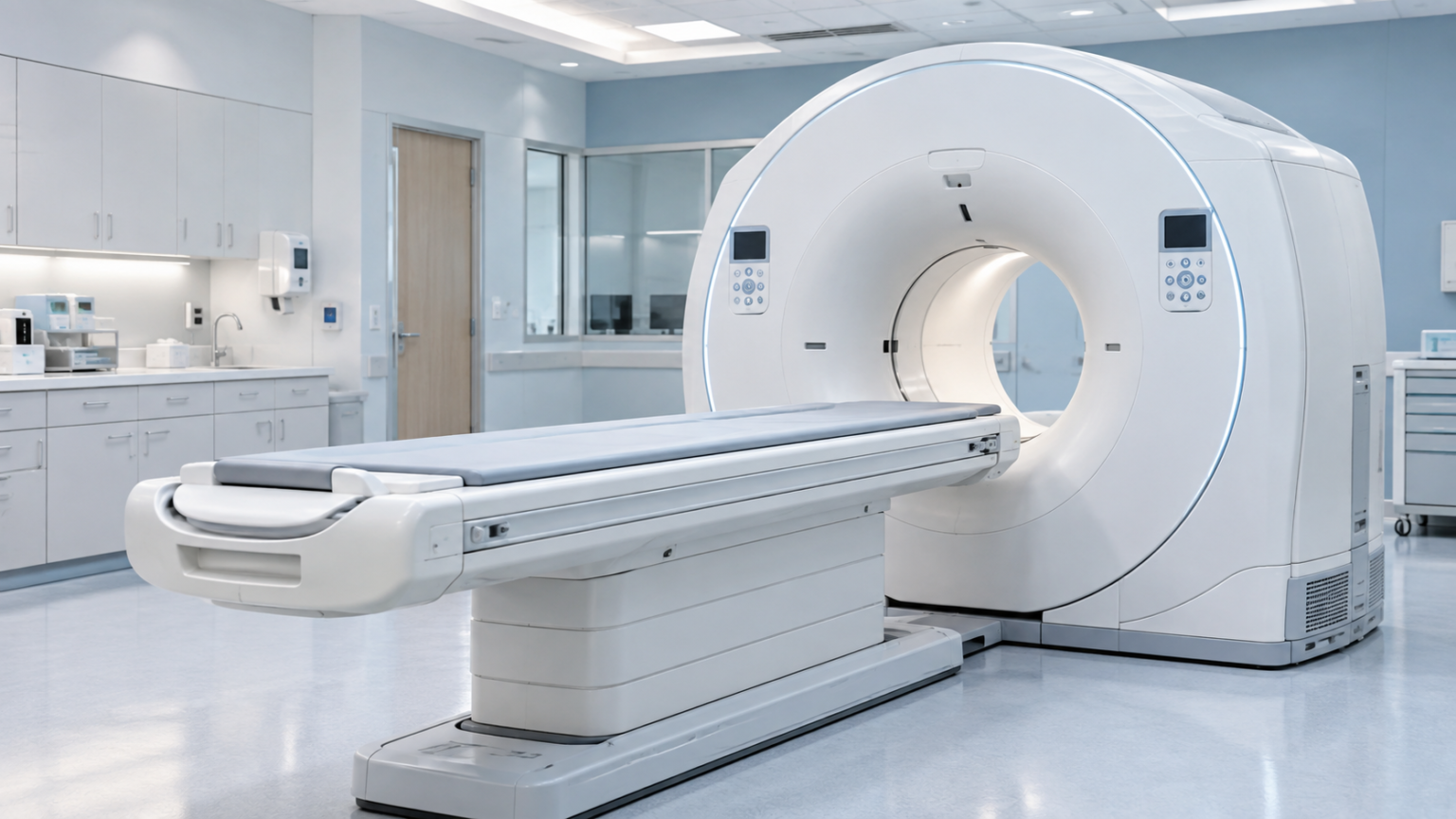

A computed tomography scan produces data, not answers. The machine records hundreds of cross-sections in a few seconds; turning them into a sentence you can act on is a separate skill, and it takes a trained pair of eyes. An online report is simply a way of getting your series to those eyes without the geography, the waiting list or the referral chain standing in the way.
The scan is only half the examination
Most people assume the difficult part happens inside the scanner. In practice, the machine does the easy half. The demanding half is the reading: deciding which of the grey shapes on screen belong there, which one deviates from normal anatomy, and whether that deviation explains your symptoms or is an incidental detail worth noting and nothing more. Two radiologists looking at the same series can weigh the same finding differently, which is exactly why a second reading has value rather than being a duplicated effort.
What the radiologist actually does with your series
Your study is not glanced at as a handful of pictures. It is opened in a diagnostic viewer, scrolled through plane by plane, and adjusted so that soft tissue, bone and vessels can each be judged on their own terms. Density is measured where measurement helps, reconstructions are viewed in different planes, and older examinations are compared whenever you supply them, because a change over time often says more than a single snapshot. At Eurodiagnosis the case goes to a radiologist who reads that part of the body every working week, and the review is carried out independently: the previous description is taken into account, but it is not allowed to set the conclusion in advance. This is exactly what you are paying for when you request a report at https://eurodiagnosis.eu/produkt/ct-scan-report/: unhurried time at the workstation, rather than a quick confirmation of what someone else already wrote.
What lands in your inbox
The finished document is written to be read twice, once by you and once by your doctor. It contains:
- a full description of what the images show, structure by structure
- an independent interpretation of the findings that matter
- possible diagnoses arranged by how likely each one is
- practical recommendations and sensible next steps, where they apply
Technical vocabulary appears where precision demands it, and then it is explained in plain terms, so the report stays useful to a consultant without becoming unreadable for you.
Where a second read earns its place
Some situations benefit more than others: an equivocal result, a report whose wording seems to contradict how you feel, a finding described as requiring follow-up without saying why, or planning before an operation when the surgeon needs certainty about what lies where. Subtle changes are easiest to miss precisely in these cases, because they sit close to the limits of what a routine read has time for. A fresh, unhurried look at the same images either confirms the original conclusion, which is reassuring in itself, or points to something worth pursuing further.
The point of all this
Waiting is the hardest part of any diagnostic process, and searching online for the meaning of a single phrase tends to make it worse rather than better. A specialist report replaces speculation with a clear, ordered account of your own examination, delivered in a predictable timeframe and, when needed, urgently. It does not take the place of your treating doctor. It gives you both something solid to talk about, and it gives you back a measure of control over what happens next.
- Healthy Gums, Stronger Smiles in Cedar Park, Texas: Warning Signs, Daily Habits, and Treatment Choices
- How to Build a College Funding Plan Before Borrowing
- Selling a House in Essex, Maryland: Timing, Costs, and Buyer Options
- Bay Village Homeowners’ Guide to Selling Quickly and Preparing for Closing
- How To Sell A House As-Is In Celina, Texas: A Guide To Price, Timing, And Buyer Checks