


Deciding to remove a tattoo is personal, whether the goal is to erase a past design, fade an area for a cover-up, or make permanent makeup less noticeable. People considering laser tattoo removal in Alachua, FL, should approach the process with patience and realistic expectations. Removal is gradual, and the right plan depends on the tattoo, the skin, and the person receiving treatment.
- Set Realistic Goals Before You Start
- How Laser Tattoo Removal Works
- What Can Affect Your Results?
- Treatment Sessions and Timing
- How to Prepare for Treatment
- What Happens During an Appointment?
- Recovery and Aftercare
- Risks, Side Effects, and Safety Questions
- Why DIY Tattoo Removal Is a Poor Choice
- Questions to Ask Before Choosing a Provider
- Final Thoughts
In Alachua, sunny weather and time spent outdoors can make skin protection an especially important part of preparation and recovery. A consultation is the place to discuss the tattoo’s colors, size, location, age, your health history, medications, and whether your goal is complete removal or enough fading to support a new design.
Set Realistic Goals Before You Start
It helps to define success before treatment begins. Complete removal may be possible for some tattoos, but it cannot be guaranteed for every ink color or design. In other cases, the practical goal is lightening the existing ink enough to give a tattoo artist a cleaner canvas for a cover-up.
A small, older tattoo with dark ink may respond differently than a large, dense, multicolored piece. The treated body area, prior removal attempts, skin condition, and any history of unusual scarring can also influence planning. A qualified provider should explain what is realistic for your tattoo instead of promising an identical outcome for everyone.
Residents of Alachua, FL, who live in nearby lake communities or regularly travel between Alachua and Clay County may also look for a medspa near Keystone Heights, FL when building a treatment schedule that allows proper healing time between visits.
How Laser Tattoo Removal Works
Laser tattoo removal uses focused light energy to break tattoo pigment into smaller particles. The body’s immune system gradually clears much of that fragmented pigment over time, which is why fading continues between appointments. Different ink colors absorb different wavelengths of light, so multicolored tattoos can require a more tailored approach.
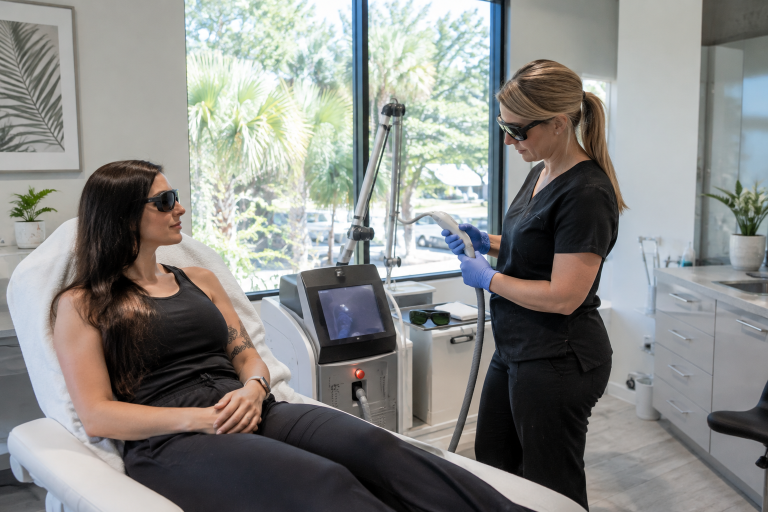
The laser devices used for tattoo lightening or removal are intended to be used by, or under the supervision of, a health care professional. A professional assessment matters because settings and techniques should reflect the ink, skin, and treatment goal.
What Can Affect Your Results?
Every tattoo has its own removal profile. Several details can shape the pace of fading and the final appearance:
- Ink color: Dark blue and black often respond more readily, while colors such as green, red, yellow, white, and flesh-toned pigment can be more challenging.
- Ink depth and density: Heavily saturated, layered, or deeply placed pigment can take longer to fade.
- Tattoo size: Larger designs generally require more treatment time than small tattoos.
- Tattoo location: Body location can affect planning and recovery.
- Skin tone: Laser settings must be selected carefully to limit unwanted changes in surrounding skin pigment.
- Prior treatment or scarring: Earlier removal methods or scar tissue may change the approach.
Treatment Sessions and Timing
One session is rarely enough. A laser cannot safely break down all tattoo ink at once, and the skin needs time to recover after treatment. Spacing appointments also gives the body time to process fragmented pigment.
Rather than relying on a fixed number of visits, consider the treatment plan a range that may change as the tattoo responds. Stopping early can leave partial fading or uneven remaining pigment. Consistent follow-through, once the skin is healed and the provider clears the next visit, supports a more complete course of care.
How to Prepare for Treatment
- Schedule a consultation and share relevant medical history, medications, supplements, and skin concerns.
- Ask how to manage sun exposure before the appointment. In Alachua, FL, and North Central Florida, this may mean planning around outdoor work, sports, yard time, or weekend trips.
- Arrive with clean, intact skin unless you receive different instructions.
- Ask about numbing or cooling options ahead of time.
- Choose loose clothing that will not rub against the treated area afterward.
What Happens During an Appointment?
The provider typically reviews the treatment goal, examines the tattoo and nearby skin, and selects settings based on the pigment and skin type. Protective eyewear is used during laser treatment. The sensation is often compared to the snap of a thin rubber band against the skin, and cooling or numbing measures may be discussed.
Redness, swelling, tenderness, pinpoint bleeding, or temporary whitening of the treated area can occur. Before leaving, patients should receive clear aftercare instructions and guidance on when to contact the office about an unexpected reaction.
Recovery and Aftercare
Immediately After Treatment
- Follow instructions for cooling, covering, and any recommended topical care.
- Avoid rubbing, picking, or scratching the area.
- Wear clothing that minimizes friction over the treated skin.
During the First Few Days
- Keep the area clean and follow the specific wound-care directions provided.
- Avoid soaking the skin unless your provider says it is appropriate.
- Pay attention to worsening pain, spreading redness, drainage, or other concerns that warrant professional advice.
Between Appointments
Sun protection is essential, particularly in Alachua, FL’s bright climate. The American Academy of Dermatology advises patients to protect treated skin from the sun while it heals. Taking progress photos in similar lighting can also help you and your provider evaluate gradual changes.
Risks, Side Effects, and Safety Questions
Laser tattoo removal is a medical procedure with possible side effects. Temporary redness, soreness, swelling, blistering, and lightening or darkening of the skin can occur. Scarring, infection, burns, and persistent texture changes are possible risks, particularly when treatment or aftercare is not handled appropriately.
Before choosing a provider, ask who performs or supervises treatment, what type of laser may be used, how your skin type affects planning, and how the practice handles delayed healing or unusual reactions.
Why DIY Tattoo Removal Is a Poor Choice
Removal creams, harsh acids, salt abrasion, and skin-scraping methods do not offer a safe substitute for professional evaluation. Tattoo pigment sits in the deeper dermis, while creams and abrasive products can damage the surface of the skin. DIY approaches may lead to irritation, burns, scars, or infection without reliably removing the tattoo.
Questions to Ask Before Choosing a Provider
- How much experience do you have with tattoos similar to mine?
- Which ink colors may be more difficult to treat?
- Is complete removal realistic, or is fading for a cover-up a better goal?
- How long should I wait between appointments?
- What side effects should I watch for with my skin type?
- What aftercare will I need to follow in the days after treatment?
- Can I see healed results from comparable cases?
Final Thoughts
Laser tattoo removal is a gradual process, not a one-visit fix. For people in Alachua, FL, the best starting point is a careful consultation, a realistic goal, a schedule that allows healing, and consistent protection of treated skin from the Florida sun. With informed expectations and professional guidance, patients can make a confident decision about their next step.
- A Day That Feels Like Your Own: Assisted Living, Choice, and Connection in Seattle, Washington
- The Daily Movement Plan for a Healthier Back in Davie, Florida
- How to Build a Practical Sports Nutrition Routine for Everyday Training
- How to Choose Window Treatments for Better Light, Privacy, Comfort, and Safety in The Seacoast, New Hampshire
- From Health Questions to Useful Evidence: How Clinical Studies Guide Better Choices