


Key Takeaways
- Meaningful activities begin with the person’s interests, choices, strengths, and goals.
- A balanced routine includes practical skills, social connection, community participation, wellness, and rest.
- Real choice includes the ability to participate, change plans, take a break, or decline an activity.
- Small adjustments can make activities more accessible, comfortable, and enjoyable.
- Progress can include confidence, communication, independence, and satisfaction, not just task completion.
A meaningful day is not simply a full calendar. It is a day that gives an adult opportunities to make choices, use their strengths, connect with others, and take part in activities that matter to them. Support from daytime care programs for adults can provide structure, skill practice, and community experiences while still leaving room for individual preferences. Families, caregivers, and support professionals can help create routines that feel useful without becoming rigid. The goal is not to keep someone busy every minute. It is to build days that include purpose, enjoyment, practical learning, and enough flexibility to respond to energy levels, sensory needs, appointments, weather, and changing interests.
- Key Takeaways
- Why a Meaningful Day Matters
- Start With the Person, Not the Calendar
- Build a Balanced Daily Routine
- Activity Ideas That Support Real-Life Goals
- Make Activities Accessible and Comfortable
- Support Choice Without Creating Pressure
- Connect Small Activities to Bigger Goals
- Track Progress in a Simple Way
- Common Planning Mistakes to Avoid
- A Simple Weekly Planning Template
- Conclusion
Why a Meaningful Day Matters
Activities can help a person maintain routines, practice everyday skills, and spend time in settings where they feel included. A schedule becomes more meaningful when the person has a genuine role in deciding what happens and how they participate. One person may find purpose in helping prepare lunch, while another may prefer creating art, volunteering, exercising, or meeting a friend at the library. A person-centered approach looks beyond diagnoses or support needs. The person-centered planning process recognizes that a person’s goals may include recreation, friendships, transportation, employment, family relationships, and community life. Those priorities can guide daily decisions instead of relying on a one-size-fits-all activity schedule.
Start With the Person, Not the Calendar
Begin planning with conversation, observation, and familiar communication methods. Some people may share preferences verbally, while others may use pictures, gestures, a communication device, behavior, or trusted supporters to express what they enjoy and what they want to avoid.
Questions to Ask
- What does the person enjoy doing at home or in the community?
- What would make a day feel successful or enjoyable?
- Do they prefer quiet time, one-to-one support, small groups, or larger gatherings?
- Which skills would they like to practice with less assistance?
- What places would they like to visit more often?
- What can make an activity stressful, tiring, confusing, or uncomfortable?
- How does the person show interest, boredom, agreement, or refusal?
Build a Balanced Daily Routine
A useful routine mixes familiar activities with opportunities to try something new. It also includes meals, transportation, personal care, breaks, and unplanned time. Overloading the schedule can create pressure, especially when transitions or busy environments are difficult.
Five Parts of a Strong Daily Plan
- Choice: Offer realistic options, such as choosing between a walk, a craft, or music.
- Skill Practice: Include tasks connected to cooking, communication, budgeting, self-care, travel, or organization.
- Connection: Create chances to talk, cooperate, visit, or enjoy a shared interest.
- Community: Use local parks, stores, libraries, classes, volunteer sites, and public events when appropriate.
- Rest: Protect quiet time and breaks so participation remains sustainable.
Activity Ideas That Support Real-Life Goals
The same activity can support different goals depending on how it is planned. Cooking can involve choosing a recipe, reading steps, measuring ingredients, practicing kitchen safety, and cleaning up. Grocery shopping can build skills in making a list, comparing items, paying, and carrying purchases.
- Gardening: Encourages movement, planning, sensory engagement, and responsibility.
- Art and music: Offer creative expression, relaxation, and opportunities to share preferences.
- Exercise or outdoor time: Can support a regular wellness routine and enjoyable movement.
- Technology projects: May include scheduling, photography, communication, games, or creative work.
- Volunteering: Can help a person contribute to a cause or place that matters to them.
- Community visits: Build familiarity with local places and everyday social routines.
Make Activities Accessible and Comfortable
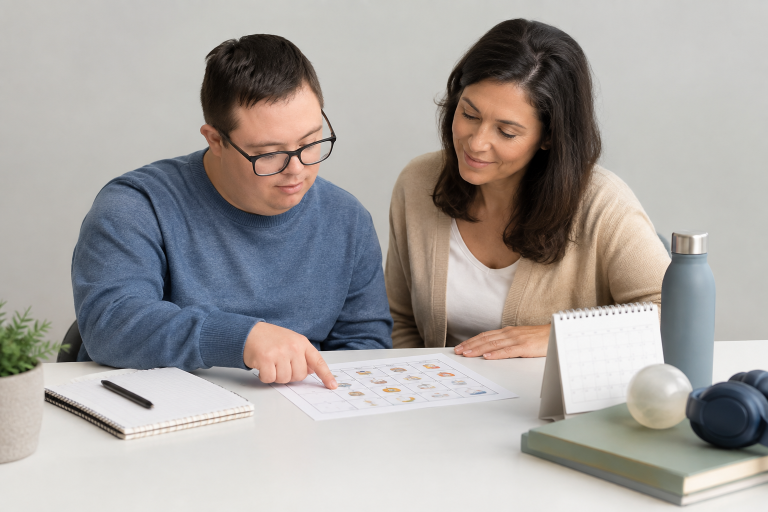
Accessibility is more than physical access to a building. A person may benefit from visual schedules, plain-language directions, adaptive tools, extra time, a quieter environment, mobility support, or a chance to observe before joining. These adjustments can make it easier to participate without changing the activity’s value.
Helpful Adjustments May Include
- Breaking a task into short, clear steps.
- Using pictures, checklists, gestures, or communication devices.
- Providing seated and standing options.
- Visiting a new location before the first scheduled activity.
- Reducing noise, bright lighting, or unnecessary waiting.
- Making it clear how to ask for help, pause, or leave.
Support Choice Without Creating Pressure
Encouragement should not turn every activity into a test. A person can be supported to try something new while still having the right to say no or choose a quieter alternative. For example, one person may enjoy a busy local event, while another may prefer selecting a book at a quiet library. Both choices can be meaningful when they reflect the individual.
Connect Small Activities to Bigger Goals
Everyday tasks often create practical opportunities for growth. Preparing a snack can support independence. Practicing a bus route can increase access to work, recreation, or friends. Joining a hobby group can create regular social contact. For people who receive Medicaid services, available home and community supports can vary by state, so families may want to review these options with a case manager or support coordinator.
Examples of Goal Connections
- Greater independence: Plan and prepare one simple meal each week.
- Better communication: Practice ordering a preferred item at a café or store.
- Community participation: Attend a recreation class, library program, or local event.
- Employment readiness: Practice arriving on time, following a sequence, and completing a useful task.
- Social connection: Schedule regular time with a friend, peer group, or family member.
Track Progress in a Simple Way
Progress is not limited to finishing a task quickly or independently. It can include making a choice, trying an unfamiliar activity, staying engaged longer, asking for help, using a new skill, or deciding to participate again. After an activity, ask whether the person appeared comfortable, what support was helpful, and what could improve next time.
Common Planning Mistakes to Avoid
- Filling every hour without breaks or personal choice.
- Giving every participant the same activity regardless of interests.
- Choosing activities only because they are convenient for staff or family.
- Using childlike activities without considering adult preferences.
- Ignoring communication, mobility, sensory, or health needs.
- Failing to revise the plan as interests, abilities, or goals change.
A Simple Weekly Planning Template
- One preferred activity: Something the person already enjoys.
- One skill-building activity: A task connected to an individual goal.
- One social activity: Time with a friend, family member, peer, or group.
- One community activity: A class, errand, outing, visit, or volunteer opportunity.
- One wellness activity: Movement, relaxation, outdoor time, or healthy meal preparation.
- One flexible block: Time for rest, weather changes, appointments, or a new idea.
Conclusion
A meaningful day does not need to be expensive, busy, or perfectly scheduled. It should reflect the person’s interests, communication style, goals, abilities, and support needs, while allowing enough flexibility to accommodate changing energy levels and preferences. Daily routines can include familiar activities such as preparing meals, practicing household skills, working, studying, exercising, pursuing hobbies, spending time with friends, or participating in community activities. Giving the person choices about what to do, when to do it, and how much support they want can encourage greater independence and personal control. At the same time, planned breaks and quiet periods can help prevent the day from becoming overwhelming. When routines include choice, useful skills, meaningful connections, community access, and time to rest, they can support a fuller, more balanced, and more self-directed daily life.
- Healthy Gums, Stronger Smiles in Cedar Park, Texas: Warning Signs, Daily Habits, and Treatment Choices
- How to Build a College Funding Plan Before Borrowing
- Selling a House in Essex, Maryland: Timing, Costs, and Buyer Options
- Bay Village Homeowners’ Guide to Selling Quickly and Preparing for Closing
- How To Sell A House As-Is In Celina, Texas: A Guide To Price, Timing, And Buyer Checks