


Key Takeaways
- Small workflow improvements can reduce avoidable food loss without slowing service.
- Written recipes and portion guides make guest experiences more consistent.
- Waste tracking helps managers improve ordering, prep, and production decisions.
- Well-matched equipment can support repeatable quality, safer work, and easier cleanup.
- Simple, visible training systems are easier for teams to follow during busy shifts.
Food waste affects more than the cost of ingredients. When usable product is discarded, operators also absorb the labor used to receive, prep, cook, store, and dispose of it. At the same time, inconsistent portions or preparation can create remakes, slow ticket times, and make it harder for guests to know what to expect from one visit to the next. Waste reduction and consistency often begin with the same operational choices. Clear recipes, appropriate storage, reliable portion tools, and a dependable supply strategy all matter. For businesses developing packaged food products or foodservice sprays, a contract food packaging company can also help support product quality and production requirements as part of a broader consistency plan.
Why Waste And Consistency Matter
A kitchen can lose money through overproduction, spoilage, incorrect portions, damaged food, and orders that must be remade. These issues are rarely isolated. A rushed prep shift may produce uneven cuts, unclear batch sizes may lead to excess food, and unlabeled containers may remain in storage too long. The result is a process that costs more while giving the guest a less reliable experience. Consistency is not about making every task rigid. It is about ensuring that the items customers order most often have dependable taste, texture, temperature, size, and presentation. When the team knows the intended result, managers can make adjustments without asking employees to guess.
Common Sources Of Waste In Foodservice
Most kitchens can find opportunities by looking at where food leaves the operation before it reaches a guest. Common sources include:
- Key Takeaways
- Why Waste And Consistency Matter
- Common Sources Of Waste In Foodservice
- Track Waste Before Trying To Fix It
- Standardize Recipes And Portions
- Improve Prep And Storage
- Choose Tools That Support The Team
- Train Staff With Simple Systems
- Build A Practical Action Plan
- Questions Foodservice Operators Often Ask
- Conclusion
- Producing too much food for slower periods of service.
- Serving portions that are larger or smaller than the recipe requires.
- Discarding ingredients because labels, dates, or storage locations are unclear.
- Throwing away usable trim that could fit an approved soup, sauce, stock, or staff-meal process.
- Overcooking food, damaging product, or making an order incorrectly.
- Spills, leaks, and inaccurate dispensing of sauces, oils, or toppings.
- Remaking orders because of quality, temperature, or presentation issues.
Consider a busy café that prepares a large amount of sandwiches before lunch, then runs out of a popular option later in the afternoon. Reviewing sales by daypart may show that smaller early batches and a scheduled second prep window better match actual demand. That approach can limit early waste while keeping top sellers available.
Track Waste Before Trying To Fix It
Changing procedures before measuring the problem can waste effort. A simple waste log gives managers a starting point and helps separate spoilage from overproduction, prep loss, or returned meals. Kitchen teams do not need a complicated system to begin. A clipboard, a shared spreadsheet, or a digital form can work if employees use them consistently.
For each discarded item, record:
- The item and approximate amount discarded.
- The reason for disposal.
- The shift, station, or production batch involved.
- Whether the loss was preventable.
- The next action that could reduce a repeat occurrence.
Commercial kitchens increasingly use data to identify what is being thrown away and adjust ordering or production practices. Food waste data from commercial kitchens can turn daily observations into more informed decisions, but the value lies in reviewing the information and acting on it.
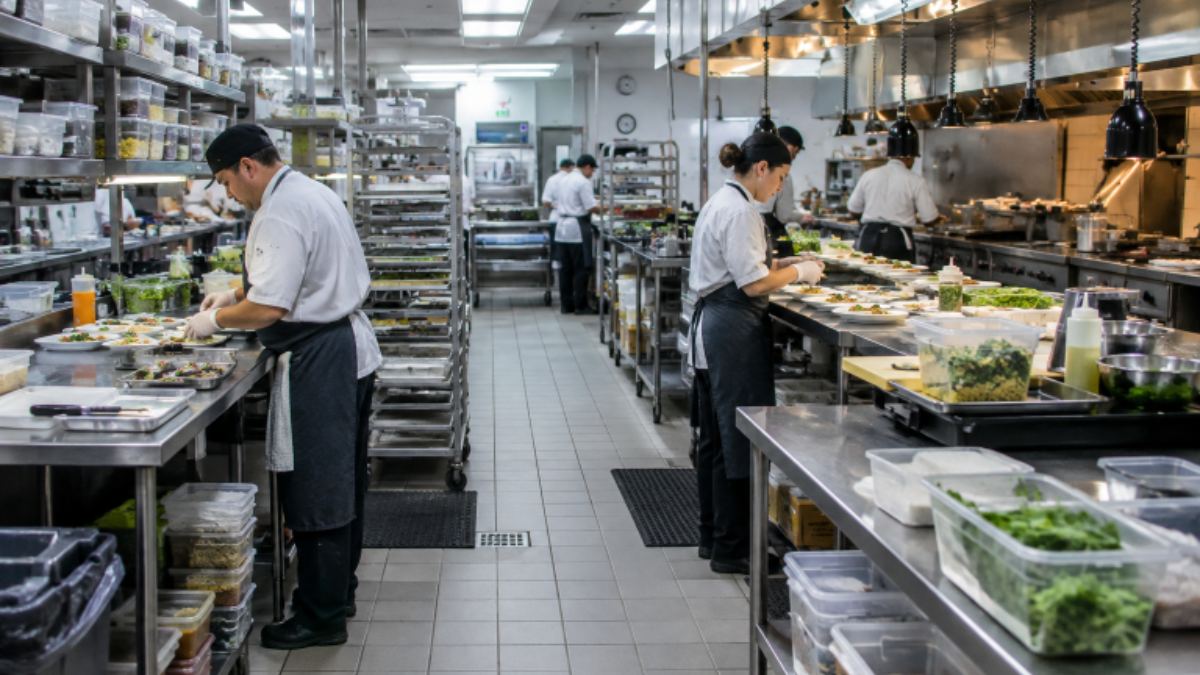
Standardize Recipes And Portions
A written recipe reduces guesswork, especially when experienced employees are training new team members. Each recipe should identify ingredients, measurements, yield, cooking method, target temperatures where applicable, plating details, and the intended serving size. Photos can be especially useful for composed dishes, baked goods, and menu items with specific presentation standards. Use portion tools that fit the menu, such as scales, scoops, ladles, pumps, spoodles, and marked containers. The goal is not merely cost control. Accurate portion sizes help ensure guests receive the same value each time they order and make it easier to forecast how much product is needed.
Recipe Testing Checklist
- Test the recipe during a normal service period.
- Measure the finished yield and number of servings.
- Confirm that several employees can repeat the stated portion.
- Check the final product for taste, texture, and presentation.
- Update the recipe when ingredients, packaging, or equipment changes.
Improve Prep And Storage
Good storage practices protect both food quality and team efficiency. Date labels, first-in-first-out rotation, clear shelf assignments, covered containers, and routine temperature checks help employees locate and use products in the proper order. Labels should be legible enough that an employee can identify an item without opening multiple containers or asking a manager. Prep scheduling also deserves attention. Instead of preparing all ingredients in a single morning batch, operators can prepare high-use components in stages when food safety and workflow allow. This approach creates flexibility when sales patterns shift and reduces the chance that prepared food sits unused for too long.
Choose Tools That Support The Team
The best kitchen tool solves a clear operational problem. Before buying equipment, determine whether the need is faster production, more accurate portions, reduced cleanup, safer handling, or less product loss. A tool that does not fit the kitchen’s volume or workflow can create another obstacle instead of solving one. Review expected daily volume, available space, cleaning requirements, training time, maintenance needs, and compatibility with current recipes. Larger operators are also testing equipment that helps characterize food waste and inform production planning. Commercial food waste initiatives illustrate how measurement technology can support management decisions, though smaller kitchens may achieve useful results with simpler tracking methods.
Train Staff With Simple Systems
Training works best when expectations are easy to see, remember, and repeat. Employees should understand where ingredients belong, how portions are measured, when food should be discarded, and how to record waste. Long manuals have a place for reference, but the day-to-day process should be visible at the station.
- Use station checklists for opening, service, and closing tasks.
- Keep recipe cards with measurements and photos near prep areas.
- Use color-coded labels or containers where they make storage easier to understand.
- Hold brief shift huddles to address one priority at a time.
- Review waste patterns weekly without treating the log as a blame tool.
Build A Practical Action Plan
Week One: Measure
Track the type, amount, and likely cause of waste at each station. Establish a baseline before making major changes.
Week Two: Fix The Biggest Losses
Choose one or two recurring problems, such as excess batch cooking, poor rotation, or inconsistent portions, and address them first.
Week Three: Standardize The Workflow
Update recipes, labels, prep sheets, and station instructions so the new process is easy to follow during service.
Week Four: Review Results
Compare the new results with the first week. Keep changes that reduce waste or remakes without harming speed or quality, then refine the rest.
Questions Foodservice Operators Often Ask
How Much Waste Should A Kitchen Track?
Start with the most frequent or expensive categories. A focused log that employees maintain is more useful than a detailed system that is abandoned after a few days.
Can Portion Control Hurt The Guest Experience?
Accurate portions generally build trust because customers consistently receive the intended serving. Operators can still offer multiple sizes while keeping each size clearly defined.
What Is The Fastest Way To Improve Consistency?
Begin with the menu items sold most often. Standardizing those recipes and portions quickly affects the largest number of orders.
Conclusion
Reducing waste and improving consistency are ongoing habits, not one-time projects. Clear recipes, measured portions, organized storage, useful tracking, and practical training can help foodservice teams make steady progress. Establishing standard preparation procedures also helps employees understand expectations, maintain consistent serving sizes, and avoid unnecessary ingredient use during busy shifts. Proper inventory management, accurate date labeling, and regular stock rotation can further reduce spoilage while ensuring ingredients remain suitable for use. Tracking food waste, purchasing patterns, and portion sizes gives managers a clearer picture of where resources are being lost and which changes are producing results. Equally important, employees need practical guidance and open communication so they can identify recurring problems and suggest workable solutions. The strongest operations review results come from consistently correcting process issues early and implementing improvements that support both employees and guests. By combining consistent procedures with ongoing monitoring and team involvement, foodservice businesses can control costs, improve kitchen efficiency, maintain food quality, and create a more reliable dining experience without compromising service standards.
- Is Dollar3.us Legit? Our Review and Verdict
- Dollar3.us Scam – What It Was and How to Protect Yourself
- Recognizing the Signs of a Healthy Relationship for Teens
- How Asphalt Maintenance & Construction Helps South Bend, IN Property Owners Evaluate, Repair, and Protect Asphalt Pavement
- How Foodservice Operators Can Cut Waste and Improve Consistency