


In Davie, Florida, daily routines often involve long drives, desk work, school pickup lines, home projects, and time spent indoors to avoid the heat or afternoon rain. A healthier back routine does not require a perfect posture or an intense workout. It starts with frequent, comfortable movement and a willingness to adjust habits before stiffness becomes a bigger distraction.
- Why Daily Movement Matters
- Start With a Simple Morning Routine
- Break Up Long Periods of Sitting
- Build a More Comfortable Desk Setup
- Protect Your Back During Driving and Travel
- Mix Strength, Mobility, and Walking
- Use Safer Lifting and Bending Habits
- Know When Pain Needs Professional Attention
- Create a Realistic Weekly Plan
- Frequently Asked Questions
- How often should someone move during the workday?
- Is sitting always bad for the back?
- Can walking help with back stiffness?
- What is the best exercise for back health?
- Build a Routine That Lasts
For people who want individualized guidance for ongoing musculoskeletal concerns, a chiropractor Davie residents can consult may help them discuss their symptoms, activity history, and appropriate next steps. Persistent back pain can have many causes, so it is important not to diagnose the problem based on posture, one exercise, or an internet checklist alone.
Why Daily Movement Matters
Staying in any one position for a long time can leave muscles and joints feeling stiff, whether that position is sitting at a laptop, standing at a counter, or driving west on I-595. The practical goal is not to hold a rigid “correct” posture all day. It is about changing positions regularly, moving through comfortable ranges, and building activity into everyday routines.
One long workout is valuable for many people, but it does not make movement breaks unnecessary. Regular physical activity supports overall health and can be accumulated through various activities throughout the day. The many ways to add physical activity to daily life make walking, errands, stairs, and short exercise sessions useful places to start.
Start With a Simple Morning Routine
A short morning reset can make the transition from bed to work, commuting, or household tasks feel less abrupt. Keep every motion smooth and comfortable rather than forcing a deep stretch.
- Stand tall and take several slow, relaxed breaths.
- Walk around the home for two to five minutes.
- Perform easy shoulder rolls and gentle neck movements.
- Practice a few controlled hip hinges, moving from the hips instead of repeatedly rounding forward.
- Finish with light mobility work that feels easy and does not increase symptoms.
Break Up Long Periods of Sitting
Movement breaks do not have to interrupt a productive day. Stand during a phone call, walk to refill a water bottle, or take a short lap after a meeting. A timer or calendar alert can be a useful cue, but discomfort itself is also a reminder to change position before it becomes intense.
A practical Davie workday might include a brief walk before logging in, one or two minutes of standing or walking between tasks, a midday walk in a shaded area or indoor space, and gentle mobility after work. Small resets are often easier to repeat than saving all activity for the end of the day.
Build a More Comfortable Desk Setup
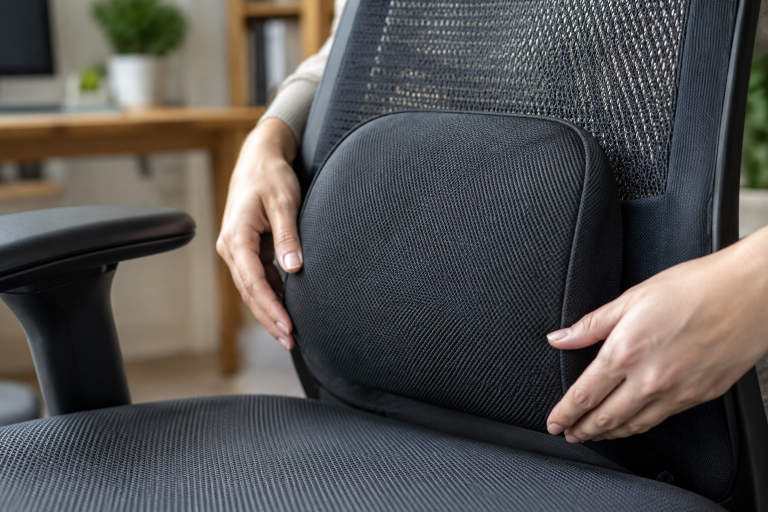
A workstation should fit the person using it. Keep the screen near eye level, place the keyboard and mouse within reach, and rest both feet on the floor or a stable footrest. Lower-back support can be useful when it feels comfortable, but no chair can replace the need to change position throughout the day.
Readers who work from home or in an office can use this office setup guide to review screen height, chair positioning, and keyboard placement. If discomfort develops, try adjusting the chair, screen, or keyboard instead of holding still in an uncomfortable position.
Protect Your Back During Driving and Travel
Commuting and travel can create long stretches of sitting. Adjust the driver’s seat so you can reach the pedals and controls without leaning far forward, keep your back supported, and allow your knees to remain slightly bent. On a longer road trip, stopping to walk for two minutes can be more refreshing than waiting until the destination to stretch.
When handling luggage, groceries, or sports equipment, avoid combining a heavy lift with a twisting motion. A small cushion may help some travelers, but remove it if it pushes the body too far forward or makes the seat less comfortable.
Mix Strength, Mobility, and Walking
Back-friendly activity goes beyond stretching: walking is accessible, mobility supports comfortable movement, strength builds capacity in the hips, legs, trunk, and upper back, and balance practice improves awareness during daily tasks.
Start with comfortable options like sit-to-stands, wall push-ups, supported bridges, and controlled bird-dogs. Stop if you feel sharp or radiating pain, numbness, or weakness. Progress gradually, changing only one factor at a time.
Use Safer Lifting and Bending Habits
- Move close to the object and test its weight first.
- Bend through the hips and knees when needed.
- Keep the load close to the body as you stand.
- Turn with the feet instead of twisting while carrying.
- Ask for help with oversized, unstable, or unusually heavy items.
These habits are meant to make demanding tasks more manageable, not to create fear around normal bending or everyday movement.
Know When Pain Needs Professional Attention
Mild soreness after unfamiliar activity may settle with rest, gentle movement, and a sensible reduction in workload. However, seek medical evaluation for pain after a fall, crash, or other injury; new numbness, tingling, or weakness; trouble walking; steadily worsening pain; pain that disrupts sleep; or symptoms that continue despite reasonable activity changes. Loss of bladder or bowel control requires urgent medical attention.
Create a Realistic Weekly Plan
- Daily: Take several brief movement breaks and walk when practical.
- Three days each week: Complete a short strength routine.
- Most days: Use comfortable mobility movements for stiff areas.
- After demanding activity: Cool down with easy walking instead of stopping abruptly.
- Each weekend: Review what felt sustainable and adjust the next week.
Busy schedules are easier to work with when the first step is small. Start with five minutes, attach it to an established habit, and build only when the routine feels manageable.
Frequently Asked Questions
How often should someone move during the workday?
Frequent position changes can be helpful, even if each break lasts only a minute or two. Do not wait for discomfort to become severe before standing or walking.
Is sitting always bad for the back?
No. Sitting is a normal part of life. The concern is usually remaining in one position for too long without changing posture or moving.
Can walking help with back stiffness?
Walking is a practical way to add regular movement. Start with a comfortable pace and distance, then adjust based on how your body responds.
What is the best exercise for back health?
The best choice is generally one that can be performed safely, repeated consistently, and completed without increasing symptoms. A combination of walking, mobility, and strength work is often more practical than chasing one perfect exercise.
Build a Routine That Lasts
A healthier back routine in Davie does not require expensive equipment, perfect posture, or a complicated fitness plan. Move often, set up workspaces thoughtfully, lift with care, and take persistent or unusual symptoms seriously. Consistent, manageable habits are the foundation for staying active through workdays, commutes, errands, and weekends.
- A Day That Feels Like Your Own: Assisted Living, Choice, and Connection in Seattle, Washington
- The Daily Movement Plan for a Healthier Back in Davie, Florida
- How to Build a Practical Sports Nutrition Routine for Everyday Training
- How to Choose Window Treatments for Better Light, Privacy, Comfort, and Safety in The Seacoast, New Hampshire
- From Health Questions to Useful Evidence: How Clinical Studies Guide Better Choices