


Key Takeaways
- A high THCA percentage alone does not establish freshness, safety, or overall quality.
- A COA is most useful when it can be matched to the exact lot or batch on the package.
- Review cannabinoid results, laboratory dates, contaminant panels, and storage clues together.
- Heating THCA can convert it to THC, which may cause intoxication and create drug-testing concerns.
- Rules for hemp-derived and cannabis products vary by jurisdiction, so buyers should confirm current local requirements.
Table Of Contents
- Why THCA Flower Labels Matter
- THCA, THC, And CBD: What The Numbers Mean
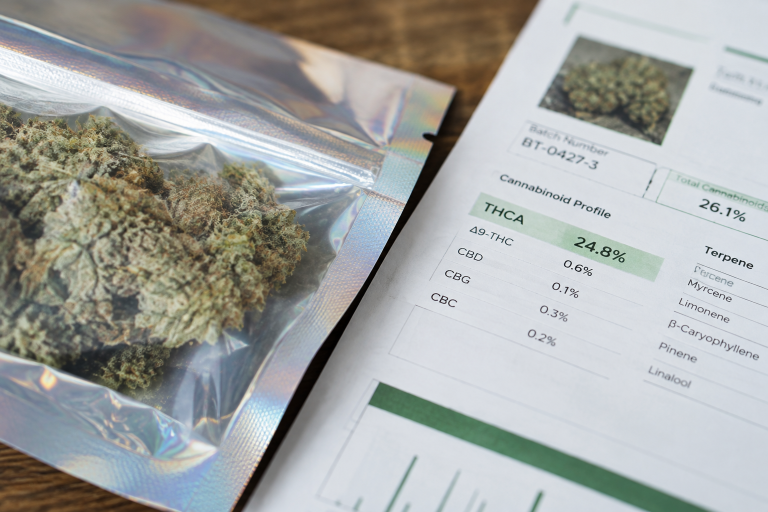
- What A COA Can Tell You
- A Five-Point COA Check
- How To Check Freshness And Storage
- Quality Red Flags To Watch For
- Legal And Safety Questions To Consider
- A Simple Pre-Purchase Checklist
- Common Questions About THCA Flower Labels
- Final Thoughts
THCA flower packaging can look straightforward until you compare the front label with the lab report. A strain name and a large percentage may catch attention, but they do not independently confirm the product’s batch, age, handling, or contaminant screening. Before you see what’s in stock, knowing how to read those details can make comparisons much more useful.
- Key Takeaways
- Table Of Contents
- Why THCA Flower Labels Matter
- THCA, THC, And CBD: What The Numbers Mean
- What A COA Can Tell You
- A Five-Point COA Check
- How To Check Freshness And Storage
- Quality Red Flags To Watch For
- Legal And Safety Questions To Consider
- A Simple Pre-Purchase Checklist
- Common Questions About THCA Flower Labels
- Does A Higher THCA Percentage Mean Better Flower?
- Can THCA Flower Cause A Positive Drug Test?
- How Recent Should A COA Be?
- Can Label Results Differ Slightly From A COA?
- Final Thoughts
The most dependable approach is to treat the package and the Certificate of Analysis (COA) as a matched set. Look for information that identifies the exact flower you are considering, then use the report to assess cannabinoid results, testing scope, and potential red flags.
Why THCA Flower Labels Matter
A label gives you a starting point, not the entire story. It should help identify the product, package size, batch or lot number, and cannabinoid information. Marketing terms like “exotic,” “premium,” or “top shelf” describe positioning but are not standard measures. Measurable details such as a batch number and lab results are easier to verify. Label requirements vary by market and product category. For example, reading a cannabis label explains why cannabinoid content, warnings, and product info matter. A clearly identified, sealed package is easier to evaluate than one with vague or missing details.
THCA, THC, And CBD: What The Numbers Mean
THCA, or tetrahydrocannabinolic acid, is a cannabinoid in raw cannabis. When heated, THCA can convert to delta-9 THC, the compound linked to intoxication. CBD alone does not cause intoxication. Labels may show both THCA and delta-9 THC, not just one THC number. For flowers, cannabinoid content is usually a percentage by weight; for products like edibles, milligrams are common. A higher percentage isn’t always better; factors like aroma, moisture, cannabinoid balance, storage, cultivation, and tolerance influence product choice.
What A COA Can Tell You
A COA is a laboratory report for a tested sample. A useful report identifies the lab, sample or product name, batch or lot identifier, relevant dates, and the reported results. It may include cannabinoid levels and screens for contaminants such as pesticides, heavy metals, microbes, mycotoxins, moisture-related measures, or residual solvents. Not every test is equally relevant to every product type, so review the panel rather than assuming every report contains the same sections.
Common report terms need context. “Pass” generally means the result met the applicable limit used for that test. “Fail” means it did not. “ND” usually means not detected at the laboratory’s reporting threshold, not necessarily that a substance is absent at every possible level. “LOQ” refers to the lowest amount that the method can reliably quantify.
A Five-Point COA Check
- Match the batch. The package lot or batch number should correspond to the COA.
- Check the dates. Note when the sample was collected and when the report was issued. A testing date is not the same as a harvest or packaging date.
- Compare cannabinoids. Confirm that the listed THCA, THC, CBD, and other results reasonably align with the product description.
- Review the safety panel. Look for clear results and status information for the contaminants the lab tested.
- Identify the lab. A complete report should name the testing laboratory and identify the sample it analyzed.
How To Check Freshness And Storage
Flowers change over time, especially with exposure to heat, light, air, and unsuitable moisture. A harvest date, packaging date, and COA date each describe different points in a product’s timeline. If available, use them together rather than treating one date as a complete freshness guarantee.
Inspect packaging before purchase when possible. A properly sealed container, intact closure, and clear product information are positive practical signs. Excessively dry flowers may crumble easily, while visibly damp material or a musty odor may warrant caution. Appearance and aroma can inform a purchase decision, but they do not replace laboratory testing. Store flowers sealed in a cool, dark, dry place.
Quality Red Flags To Watch For
- No available COA, or a report that cannot be connected to the package.
- A missing laboratory name, product identifier, batch number, or report date.
- Large differences between the package claim and COA results without an explanation.
- Incomplete contaminant information or a report that shows a failed result.
- Unusual wet coatings, strong chemical odors, damaged packaging, or unexplained residue.
- Pressure to buy before you can inspect product details or access the report.
Legal And Safety Questions To Consider
Legal treatment of THCA flower can depend on federal rules, state law, product classification, and how the product is handled or used. Check the rules where you live, and anywhere you plan to travel, before purchasing, possessing, or transporting it. If THCA is heated, exposure to THC is possible. People subject to workplace, athletic, court-ordered, or medical testing should treat THCA flower as a potential drug-testing risk.
Do not drive or operate machinery while impaired. Cannabis can affect skills used for safe driving, including reaction time, coordination, and judgment. The CDC also notes that combining cannabis with alcohol can increase impairment, so avoid driving after cannabis use and avoid mixing intoxicating substances. Minors, pregnant or nursing people, and people taking medications should speak with a qualified health professional before use.
A Simple Pre-Purchase Checklist
- Is the flower clearly identified by name, size, and batch or lot number?
- Can you access a complete COA without difficulty?
- Does the batch number on the COA match the package?
- Are cannabinoid results and test dates clear?
- Does the report show contaminant testing and passing results?
- Is the container sealed, undamaged, and suitable for protecting the flowers?
- Have you checked the current rules that apply where you are?
Common Questions About THCA Flower Labels
Does A Higher THCA Percentage Mean Better Flower?
No. Potency is one data point. A batch may be more suitable based on freshness, aroma, testing transparency, cannabinoid profile, and your personal tolerance.
Can THCA Flower Cause A Positive Drug Test?
It can present a risk, particularly when heated, because THCA can convert to THC. Anyone who may be tested should avoid assuming that a THCA label removes that possibility.
How Recent Should A COA Be?
There is no single timeframe that applies everywhere. Prioritize a complete report tied to the exact batch being sold, then consider the product’s harvest, packaging, and storage history.
Can Label Results Differ Slightly From A COA?
Small differences can occur due to rounding or testing variability. A substantial mismatch, however, is a reason to ask questions or choose another product.
Final Thoughts
A confident THCA flower purchase starts with more than a strain name or headline percentage. Match the package to its COA, review what was tested, consider freshness and storage, and check the legal and safety issues that apply to you. That process creates a stronger basis for an informed decision.
- Healthy Gums, Stronger Smiles in Cedar Park, Texas: Warning Signs, Daily Habits, and Treatment Choices
- How to Build a College Funding Plan Before Borrowing
- Selling a House in Essex, Maryland: Timing, Costs, and Buyer Options
- Bay Village Homeowners’ Guide to Selling Quickly and Preparing for Closing
- How To Sell A House As-Is In Celina, Texas: A Guide To Price, Timing, And Buyer Checks